Usable Perimeter Matters More Than Overall Top Size
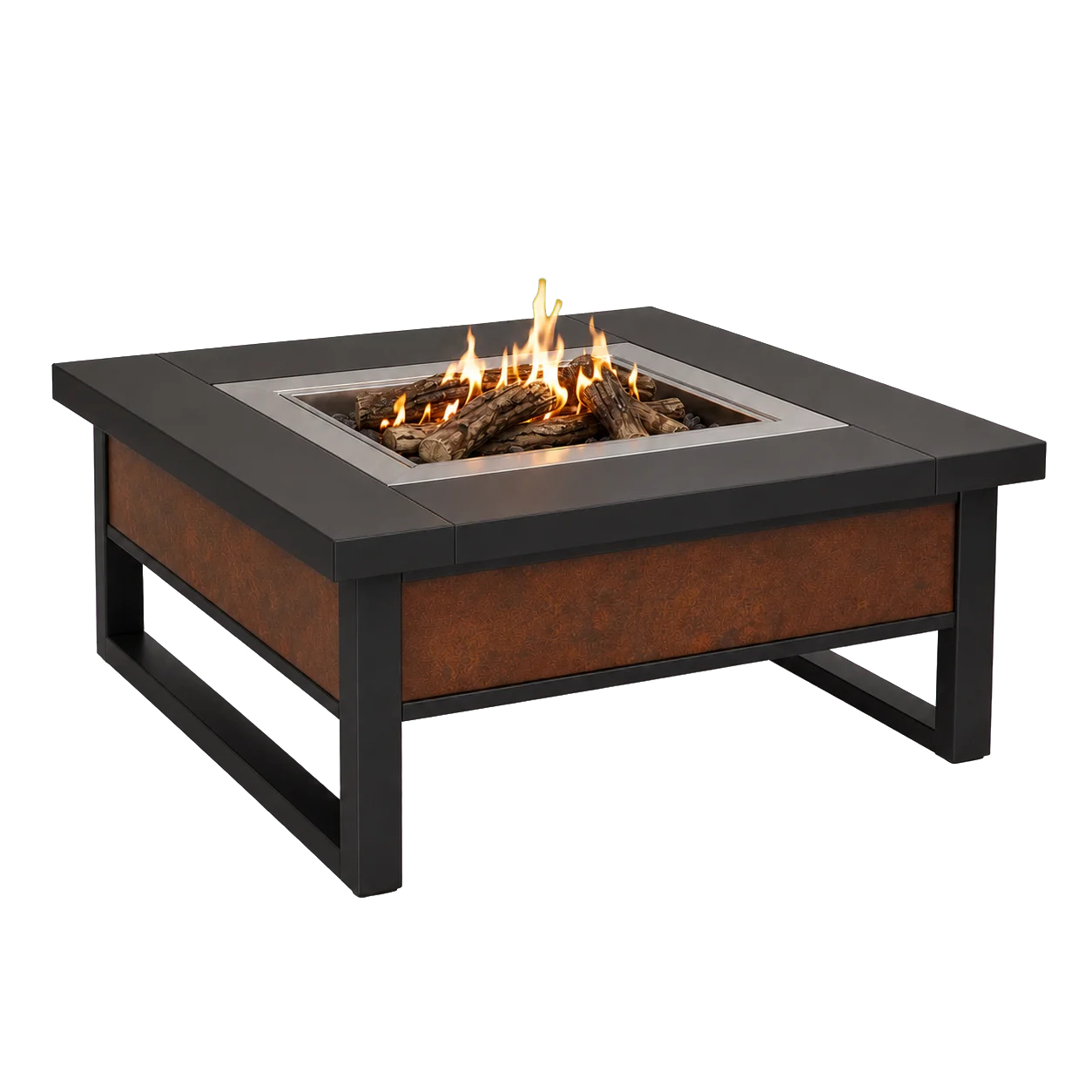
The fire opening and required hot zone reduce the space available for cups or serving items. Product dimensions should distinguish this usable ledge from the complete tabletop size.
Wholesale Fire Pits
These furniture-scale fire tables combine a planned seating layout, usable perimeter, stable structure and clearly defined fire module with appropriate outdoor care guidance.
Product Focus
A fire pit table must work both as outdoor furniture and as a live-fire product. Overall footprint, usable ledge, chair circulation and base stability shape the furniture experience, while the insert, heat separation, fuel and cooling routine define the fire zone. A fitted cover restores surface continuity only after the unit is fully extinguished and cold.
The fire opening and required hot zone reduce the space available for cups or serving items. Product dimensions should distinguish this usable ledge from the complete tabletop size.
Fire-facing insert, decorative top and structural base may require different grades, finishes and care instructions. They are not collapsed into one broad material claim.
Top protection, corner restraint, base assembly and replacement hardware are considered with the shipping route so furniture surfaces arrive in the intended condition.
Design Details
The fire opening, tabletop depth, base stability and guest circulation must be confirmed together for the selected furniture-scale layout.
Frame geometry and leveling carry the top, fire module and declared cold-table load without relying on the insert for structural stiffness.
A supported bowl or chamber separates the selected fuel from decorative top and base materials.
Opening size and heat separation leave a stated ledge for the intended seating arrangement rather than treating the whole top as usable.
After complete extinguishing and cooling, a supported cover can close the opening according to its declared non-burning load and care instructions.
Specifications
Overall dimensions alone are insufficient; buyers should define the fire-bowl interface, usable ledge, chair layout and required cover or insert.
Materials & Finish
Heat-facing components, decorative top and structural base are scheduled separately so outdoor care and temperature exposure are communicated accurately.
The chamber uses steel appropriate to the selected fuel and heat duty, with ash and drainage details independent from the furniture surface.
Metal or another selected outdoor top material is specified with heat-zone separation, finish care and realistic scratch or weather expectations.
The frame, feet and fasteners are selected for the assembled load and exposure, with replacement hardware identified where practical.
Applications
The format fits furnished outdoor spaces where clearances, seating layout, supervision and local fuel rules can be controlled.
Fire tables suit planned seating groups where usable ledge, chair clearance and supervised outdoor operation are understood.
Managed venues can specify cleanable surface finishes and replaceable service parts around operator-controlled fuel, shutdown and maintenance routines.
Retailers can compare models by assembled footprint, usable perimeter, cold-table load, delivery format and the clearly identified solid-fuel insert.
OEM & Private Label
Private-label work can coordinate table dimensions, top material, fire insert, cover and packaging after the intended seating arrangement is known.
FAQ
The practical discussion covers usable tabletop area, hot-zone separation, complete-module specification and delivery protection.
Usable area is the perimeter outside the fire opening and required hot zone. It should be stated separately from the complete top dimensions.
Only after the fire is fully extinguished and cold, and only when the cover and supports have a declared non-burning load. A decorative lid is not automatically load-rated.
No. Gas systems require dedicated components, controls and destination-market certification, so they must be specified separately rather than substituted into a solid-fuel table.
Seating layout, circulation, supervision, permitted fuel, shutdown procedure, cleaning access and local rules should be defined before selecting the table.
Large tops and frames are vulnerable to corner impact, abrasion and flex. Their restraints and surface protection must reflect the actual shipping route and assembly format.