Measured Openings Replace Catalog Assumptions
Project drawings record the clear opening, depth, shape tolerance and access for installation. Flanges, tabs or segmented joints are then developed around that verified site information.
Wholesale Fire Pits
These metal fire pit liners are configured around measured openings, supported installation and declared fuel use for hardscape, replacement and masonry projects.
Product Focus
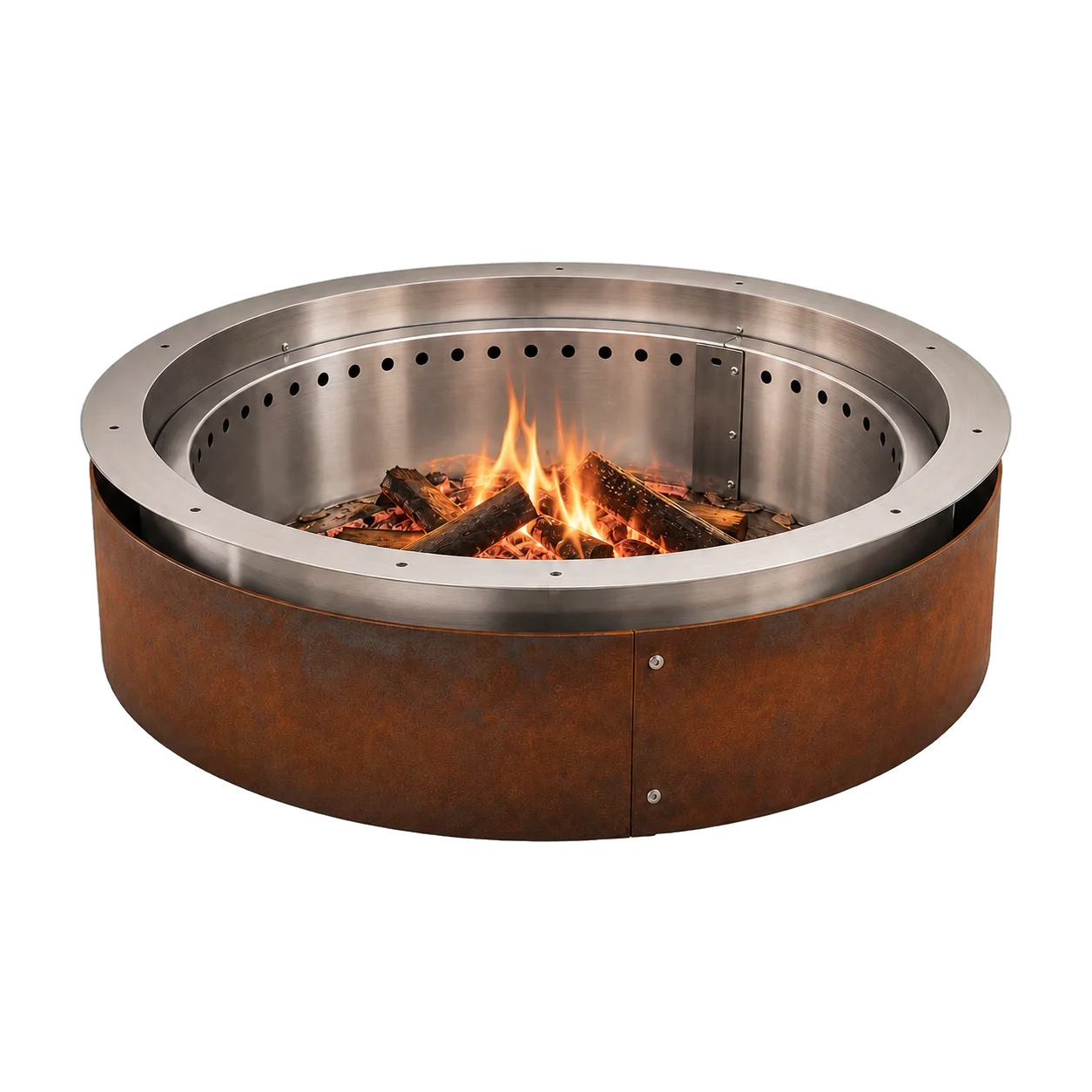
A ring or insert is a fitted project component rather than a freestanding decorative fire pit. Internal and external dimensions, support ledge, wall construction and drainage determine whether it can be installed and serviced correctly. Nominal diameter alone cannot describe the interface with an existing masonry opening.
Project drawings record the clear opening, depth, shape tolerance and access for installation. Flanges, tabs or segmented joints are then developed around that verified site information.
The metal liner should sit on a defined ledge or fastening system while allowing the planned water and cooled-ash route. Adjacent masonry does not compensate for an unsupported insert.
One-piece welded, segmented and bolt-together structures have different freight and assembly implications. The selected format includes an identified hardware set and dimensional installation guidance.
Design Details
Actual opening dimensions, wall interface, drainage and fuel area determine whether an insert installs securely and remains serviceable.
Clear internal dimensions, depth, wall build-up and tolerances replace assumptions based on a nominal masonry size.
The insert transfers its load to a measured ledge or fastening arrangement without depending on loose contact with masonry.
Wall height and internal opening are coordinated with the declared fuel, ash access and any supported screen or grate.
The design preserves the planned water route and leaves practical access for assembly, inspection and eventual replacement.
Specifications
The required drawing should record clear internal dimensions, support ledge, wall construction and site drainage rather than relying on a catalog size label.
Materials & Finish
Ring plate, support tabs, fasteners and optional cooking parts are declared by component, with finish choices matched to direct heat and weather.
A fabricated carbon-steel liner supports cost-conscious installations where thickness, finish exposure and outdoor care are specified.
Declared stainless can suit unpainted project requirements, with grade and component allocation matched to the site exposure.
Weathering steel fits compatible landscape work that plans for changing patina and early runoff around adjacent masonry.
Applications
The category suits built-in or refurbishment work where installers can verify the site and maintain the required clearances.
Installers can coordinate the liner opening, ledge and drainage while the surrounding structure is being built.
Measured inserts can renew an existing fire area where the remaining masonry and support condition are verified first.
Segmented formats suit projects where hardware, assembly order and dimensional installation guidance are complete.
OEM & Private Label
Private-label development can adapt diameter, wall height, flange, support tabs and accessory interfaces from a dimensioned site drawing.
FAQ
Fit, support and drainage carry more project risk than the visible rim, so the installation data must lead the specification.
No. They are liners or project components intended for a compatible supported installation unless a specific model includes its own freestanding base.
Provide clear internal width or diameter, depth, opening shape, support ledge, wall build-up and access tolerances.
Yes, but joint strength, hardware retention, assembly access and dimensional accuracy must remain appropriate to the installed fire area.
No. The complete construction, surrounding materials, clearances, drainage and local requirements must be documented for the intended fuel and installation.
It can be included where a stable support and declared food-contact surface are designed into the liner rather than improvised on site.