Usable Fuel Area Is More Informative Than Outer Diameter
The inner curve, rim and any grate reduce the working fire area. Product dimensions should distinguish the visible outer size from the space available for the declared fuel.
Wholesale Fire Pits
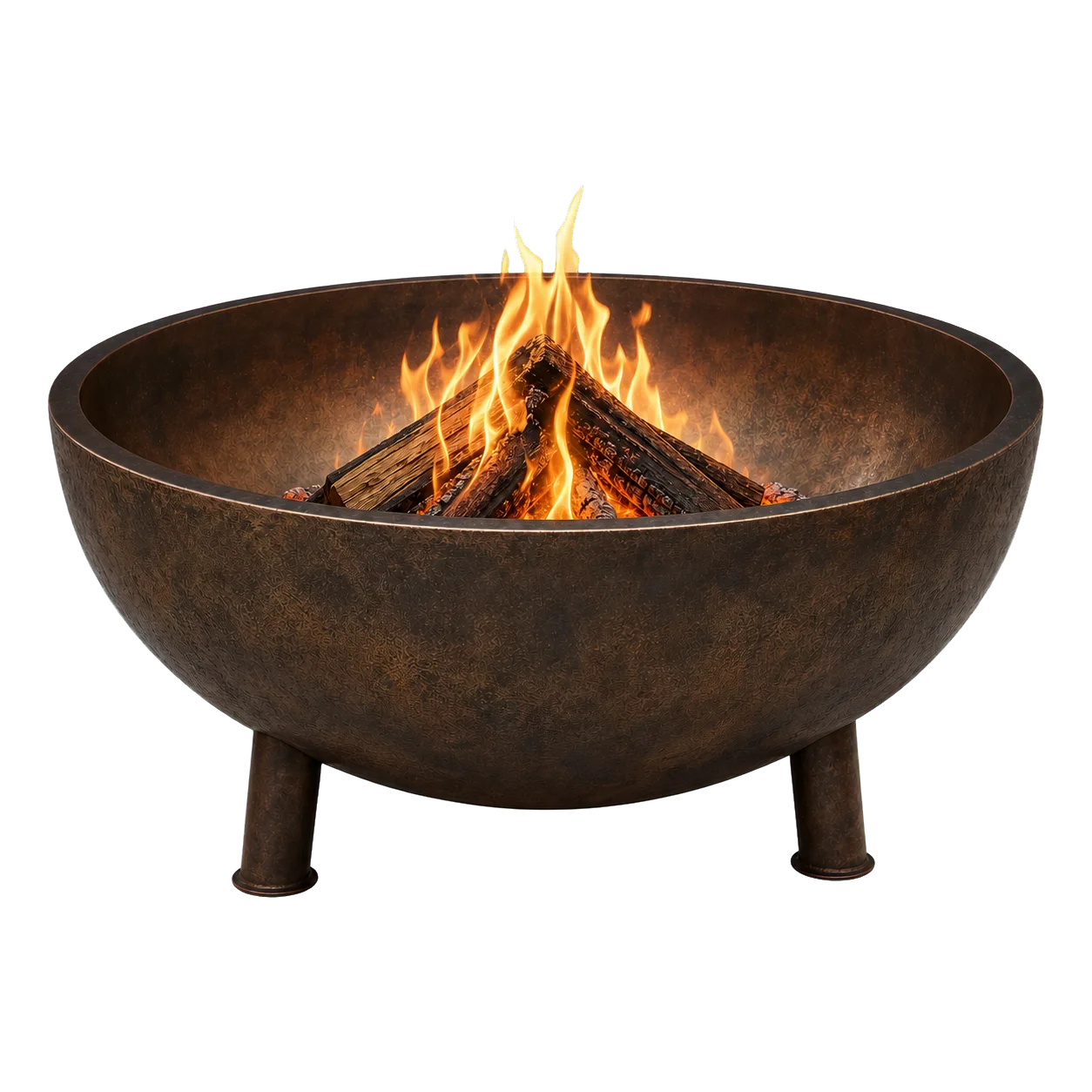
These open fire bowls combine a defined usable diameter, formed-shell depth, stable base geometry and material finishes suited to the intended outdoor site.
Product Focus
Shell curvature, rim stiffness, fuel depth and the relationship between bowl and base define the usable fire area and support requirements. Material selection then determines how the exposed surface ages, drains and should be maintained outdoors.
The inner curve, rim and any grate reduce the working fire area. Product dimensions should distinguish the visible outer size from the space available for the declared fuel.
Feet, a ring or a pedestal should support the curved shell without a narrow contact point or unstable stance. The chosen site surface and filled fuel load are part of that specification.
Coated steel, cast iron and weathering steel do not share the same weight, corrosion or care profile. Product information explains the selected material and its outdoor maintenance requirements.
Design Details
Bowl forming, rim stiffness, base contact and drainage determine whether the simple open form remains stable and serviceable.
Diameter, depth and curvature are produced as one shell so the rim remains even and the intended fuel area is preserved.
A rolled, folded or reinforced edge supports the open span and provides a defined seating surface for compatible screens or grates.
A ring, feet or pedestal spreads the filled bowl load and resists rocking on the nominated prepared surface.
Openings and removable components address rainwater and fully cooled residue without weakening the central support.
Specifications
Selection should account for usable fuel area, shell material, rim geometry, the foot or pedestal and the intended outdoor placement.
Materials & Finish
Carbon steel, cast iron and weathering steel have different forming, mass, corrosion and outdoor-aging requirements.
Carbon steel supports coated bowls when shell thickness, rim treatment and finish limits are declared.
Cast iron provides a heavier traditional format with its own casting, corrosion and seasonal-care expectations.
Declared weathering steel offers an evolving landscape surface with site-specific runoff, drainage and care requirements.
Applications
The open form suits designed outdoor spaces when stability, drainage, fuel limits and local fire rules remain explicit.
Open bowls suit prepared garden or patio areas where placement, local fire rules and seasonal care are understood.
Proportion, pedestal design and weathering finish can suit designed outdoor spaces when site runoff and drainage are considered.
Larger bowls may fit supervised outdoor settings with a documented operating zone and maintenance responsibility.
OEM & Private Label
OEM options can coordinate diameter, depth, rim, base and finish with the intended landscape or patio setting.
FAQ
Bowl depth and diameter should be considered with base stability and fuel volume, not as decorative measurements alone.
Internal diameter indicates the usable fire area, while internal depth helps define the available fuel space. Both are more informative than the outer rim dimension alone.
No. Weight must be considered with material, wall distribution, rim stiffness and base support. Excess mass alone does not prove better heat-cycle performance.
No universal decking claim should be made. The specified base, heat separation, manufacturer clearances and local rules determine the permitted installation.
Their patina evolves with exposure and may create rust-colored runoff during early weathering. Site and care guidance should explain that behavior.
Yes, when the rim includes a stable support sized for that accessory and any cooking surface has a separate food-contact specification.