Usable Cooking Area Excludes Handles and Dead Zones
Capacity is based on the food-contact surface that receives practical heat, not the complete outer dimension of a grate or plancha.
Wholesale Fire Pits
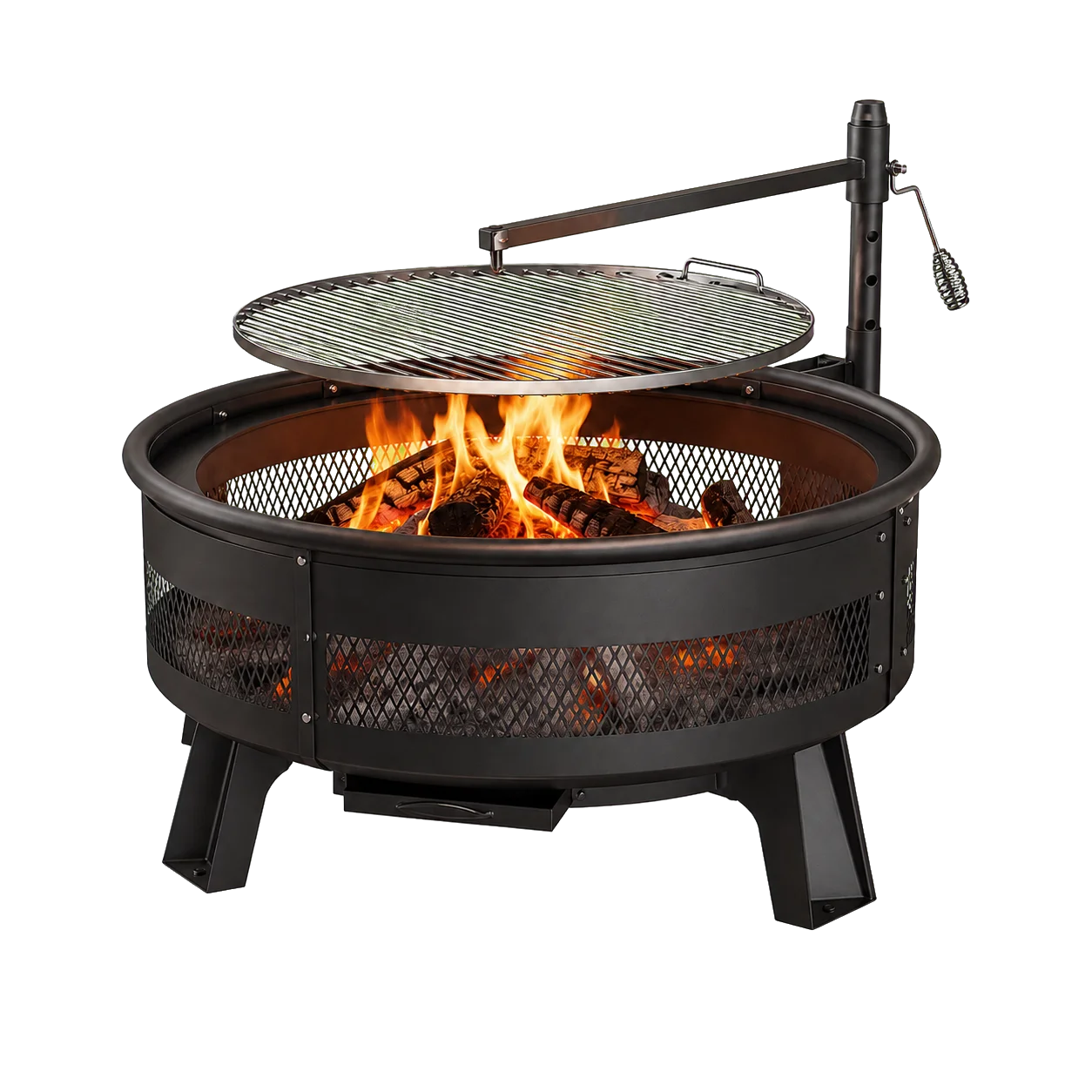
These fire pit grills combine a defined usable cooking area, stable cooking supports, accessible fuel tending and identified service parts for backyards, campsites and outdoor events.
Product Focus
A fire pit becomes a practical grill when operators can load fuel, control cooking height, move food and clean the surface without balancing a loose grate over the flame. Body coatings and cooking materials are treated as separate specifications, while the grate, plate, tools and ash components are designed around a stated menu and serving capacity.
Capacity is based on the food-contact surface that receives practical heat, not the complete outer dimension of a grate or plancha.
Fixed, swivel or height-adjustable cooking modules should allow the nominated wood or charcoal to be tended without unsafe improvisation or removal of a fully loaded surface.
Grate or plate material, treatment and cleaning guidance are stated independently. A heat-resistant coating on the fire-pit body is not presented as suitable for direct food contact.
Design Details
Fuel access, grate support, cooking height and grease management must remain practical while the fire pit is used as a social cooking station.
Wood or charcoal is supported below the cooking system with access for ignition, tending and cooled ash removal.
Fixed, swivel or adjustable supports keep the grate or plate stable over the intended fuel load.
Handles, fuel openings and hot adjustment points are arranged so normal tending remains on the operator side rather than crossing the main food-transfer side.
Grates, plates and grease components can be removed after cooling without dismantling the structural fire-pit body.
Specifications
Serving count, menu, grate dimensions and cooking-surface material should be established before decorative body choices are made.
Materials & Finish
Grates and plates receive their own material and finish declaration; heat-resistant body coatings are not represented as food-contact finishes.
Carbon or stainless steel forms the chamber according to heat duty and outdoor exposure, independently from food-contact claims.
Stainless grates or plates provide a removable, cleanable surface with a declared grade and surface treatment.
Cast iron supports heat retention for suitable menus while adding weight and requiring seasoning and corrosion care.
Applications
The format supports shared outdoor cooking where operators can tend fuel, move food and clean the cooking assembly without dismantling the complete body.
Larger formats can support shared meals when the grate area, fuel access and operating zone suit the planned serving group.
Portable versions prioritize complete-kit size, stable deployment and separation of fully cooled grease-bearing and ash-bearing parts.
Selected products may suit supervised cooking where operators control fuel, cleaning, replacement parts and guest circulation.
OEM & Private Label
OEM development can align cooking zones, grate modules, tools, grease control and replacement parts with domestic or managed hospitality workflows.
FAQ
Usable cooking area, food-contact documentation and service access provide a better comparison than accessory count alone.
Use the food-contact area inside handles, inactive borders and support hardware, not the complete outside dimensions.
Do not assume so. Food-contact parts require their own material, treatment and destination-market documentation.
The mechanism should follow the menu, supported load, fuel-tending route, operator position and the retention method available on the selected host.
Yes, where fuel support, air access, grate height and ash capacity are designed and documented for both modes.
Grates, plates, handles, support pins and selected ash or grease components are useful service items when their model interfaces are clearly identified.