Material Identity Must Be Verifiable
The component schedule identifies the declared weathering-steel grade and distinguishes any ordinary carbon-steel, stainless or coated parts used elsewhere in the assembly.
Wholesale Fire Pits
These weathering-steel fire pits combine declared plate construction, planned drainage and clear guidance on patina development, runoff and adjacent surfaces.
Product Focus
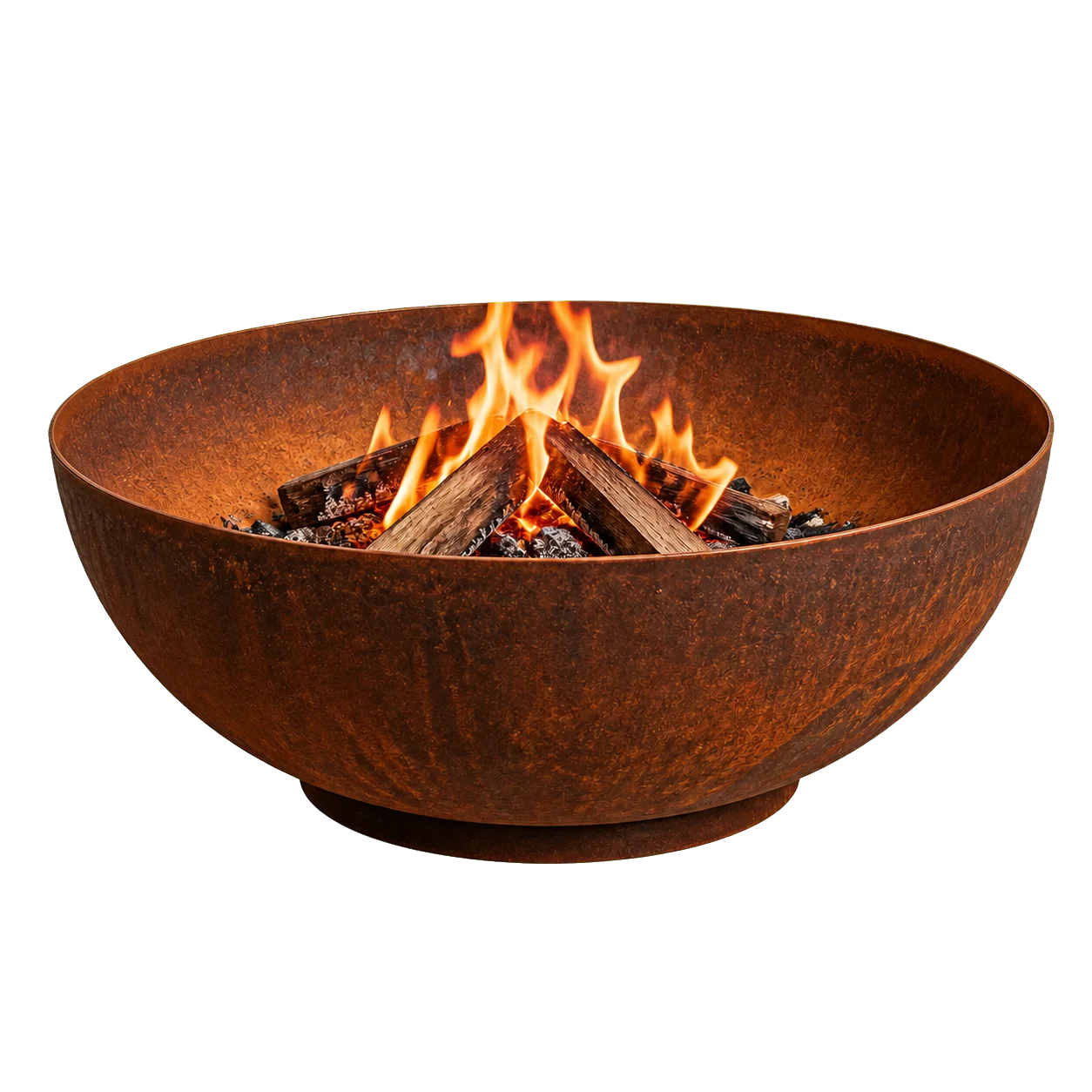
Weathering steel changes color as it is exposed outdoors and may release rust-colored runoff during early aging. Suitable projects account for material grade, supported geometry, drainage and the surrounding paving before selecting the visual form. Raw, pre-weathered and treated delivery conditions should be described separately.
The component schedule identifies the declared weathering-steel grade and distinguishes any ordinary carbon-steel, stainless or coated parts used elsewhere in the assembly.
Drainage, rainfall exposure and tolerance for temporary staining are considered with nearby stone, concrete or decking. Optional base protection may be appropriate for sensitive surfaces.
Product information explains that tone and texture evolve rather than promising a uniform permanent rust color or a maintenance-free surface in every climate.
Design Details
Steel grade, drainage, supported geometry and runoff planning determine whether the changing surface suits the intended landscape.
Weathering-steel grade, thickness and bends are assigned to the fire chamber rather than inferred from a rust-colored surface.
Returns, joints and base contact are developed around the selected form and its repeated exposure to heat.
Openings and feet keep water from pooling while site guidance addresses possible rust-colored staining during patina development.
Raw, pre-weathered or treated delivery is documented so buyers understand that final color and texture continue to respond to climate.
Specifications
Material grade, plate thickness, drainage, adjacent surfaces and expected aging define whether the weathering-steel body suits the site.
Materials & Finish
The body uses declared weathering steel; any accelerated patina, clear treatment or contrasting component is stated separately.
The component schedule identifies the actual weathering grade and plate thickness used for the primary fire structure.
Grates, fasteners or removable ash parts may use stainless where selected, and are listed separately from the patinating shell.
Accelerated weathering or a compatible treatment is described as a delivery condition, not as a permanent uniform finish.
Applications
The material fits sites that accept color change and early runoff, with prepared placement and realistic maintenance guidance.
Weathering-steel fire features suit projects that plan drainage, adjacent paving and the changing surface as part of the site.
The evolving patina suits prepared garden settings where placement and early-runoff guidance are addressed from the outset.
Specified models may suit managed outdoor spaces where the operator accepts the aging behavior and controls fire use.
OEM & Private Label
Private-label work can coordinate plate geometry, drainage, patina stage and packaging with the intended landscape setting.
FAQ
Grade verification, runoff and site compatibility explain why a natural patina is not a maintenance-free surface.
No. The product should use a declared weathering-steel grade. A rust-colored coating or artificially rusted ordinary steel is a different material route.
No. Exposure, moisture, climate and time affect tone and texture, so natural variation should be expected.
Rust-colored runoff may occur, especially during early weathering. Site planning, drainage and optional surface protection should account for it.
No. Ash removal, drainage, inspection and suitable seasonal care remain necessary, and some environments may not support stable patina formation.
A pre-weathered condition can be specified, but appearance limits and packaging must reflect the fact that the surface will continue to evolve after installation.