Fuel-Bed Height Shapes Heat and Cleanup
A raised charcoal support can admit air and separate ash from active fuel. Its depth and capacity are selected for the intended session rather than copied from a wood-fire chamber.
Wholesale Fire Pits
These charcoal fire pits combine a supported fuel bed, defined air access and practical ash removal, with cooking parts reserved for models designed for food preparation.
Product Focus
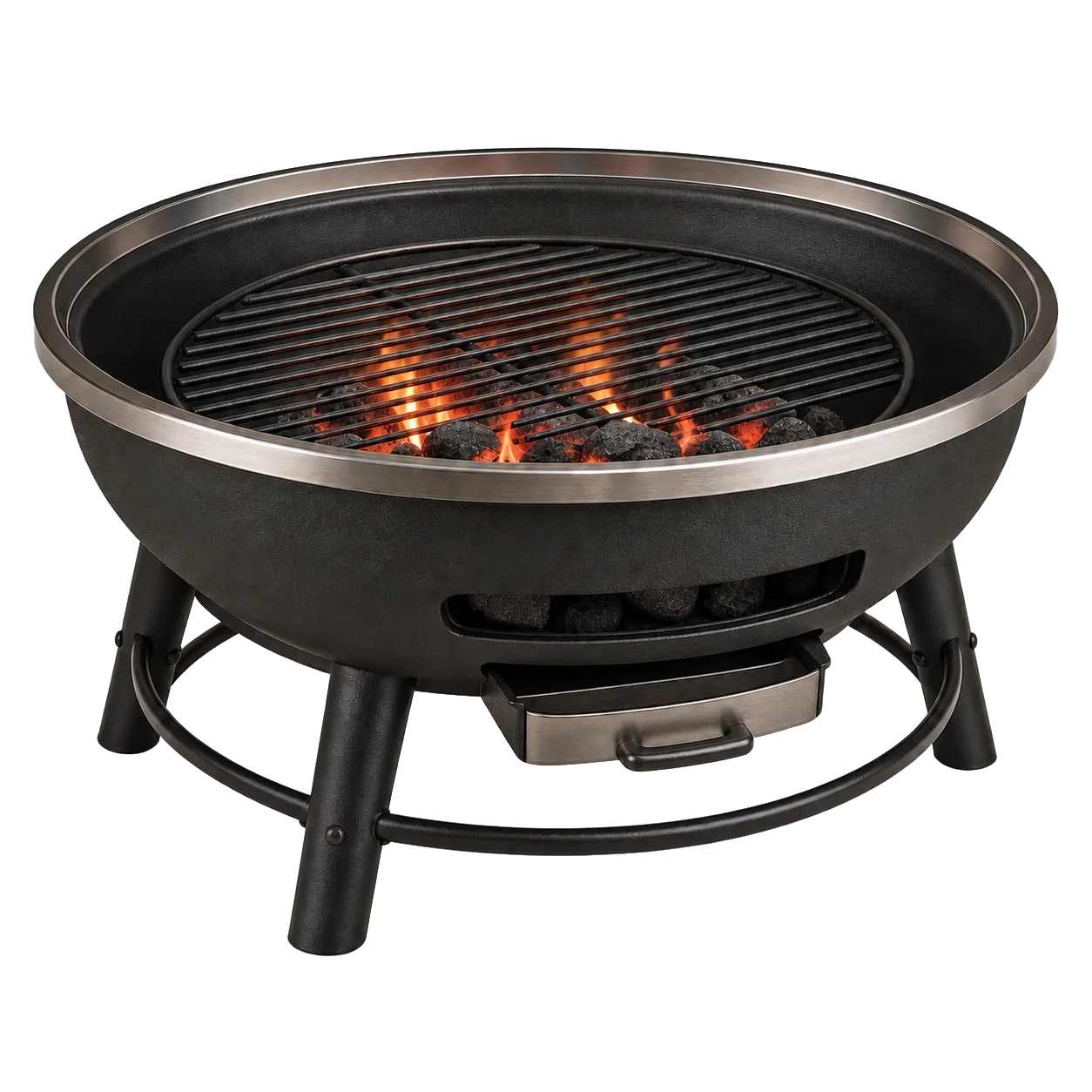
A charcoal model may serve as an open fire feature, an occasional grill or a deliberate combination of both. Fuel-bed depth, air entry and ash capacity establish the fire function; usable cooking area and declared food-contact materials establish the grill function. Keeping those roles explicit prevents a decorative grate from becoming an unsupported cooking claim.
A raised charcoal support can admit air and separate ash from active fuel. Its depth and capacity are selected for the intended session rather than copied from a wood-fire chamber.
Where grilling is included, the grate material, usable area, support and cleaning method are documented separately from the coated body and decorative rim.
A removable collector or defined cleaning route makes cooled residue easier to handle. Capacity and access should match the charcoal load without disrupting the main body.
Design Details
Charcoal support height, air access, usable ember area and a removable ash route shape both heat management and cleanup.
A supported grate creates room for lower air and separates active briquettes from accumulating ash.
Fixed or adjustable inlets are positioned around the intended charcoal load and the body’s heat duty.
Where supplied, the food grate seats securely at a declared height and leaves a practical route for tending fuel.
The ash tray or cleaning access is sized for the expected charge and handled only after residue is fully cold.
Specifications
Buyers should first decide whether the model is intended for open-fire ambience, occasional grilling or both, then define grate height and ash capacity for that use.
Materials & Finish
Fuel grates, food-contact parts and coated outer panels are specified as separate zones because they have different heat, cleaning and documentation requirements.
Carbon steel supports an outdoor fire-pit structure while coatings remain separate from direct food-contact surfaces.
Cast iron can provide grate mass and heat retention, with seasoning, corrosion and handling guidance appropriate to its use.
Declared stainless may suit removable cooking grates or ash collectors that benefit from straightforward cleaning and corrosion resistance.
Applications
This category serves customers familiar with charcoal management when the included grate, tending access and cooled-ash routine are explained clearly.
Cooking-equipped models suit small outdoor meals when usable grate area and charcoal capacity match the serving group.
Non-cooking versions can focus on a defined charcoal bed and ash care without carrying unnecessary food-contact claims.
Compact formats fit permitted day-use locations where cooling, ash removal and sooty-part transport are manageable.
OEM & Private Label
Private-label options can coordinate fuel-bed depth, grill position, lid or screen, tool set and cleanup components with the planned menu and serving count.
FAQ
Fuel-bed geometry, food-contact materials and ash handling are the central buying questions, not a generic multi-fuel claim.
No. A grill version needs a stable food-contact surface, usable cooking area, suitable material and clear tending access to the fuel bed.
It can allow air beneath the fuel and give ash room to fall away, provided the body and grate are sized for the intended charge.
Only when the chamber, grate, airflow and instructions specifically support wood. Fuel compatibility should not be assumed.
Stainless offers straightforward care, while cast iron offers greater heat retention with more weight and seasoning needs. The menu and maintenance expectation should decide.
Residue must be fully extinguished and cold before the collector is removed or ash is disposed of according to local requirements.