Two Tasks in the Same Meal
Choose the tasks for each position first, then evaluate whether the selected firebox provides the needed heat with both pots in place.
Wholesale Camping Stoves
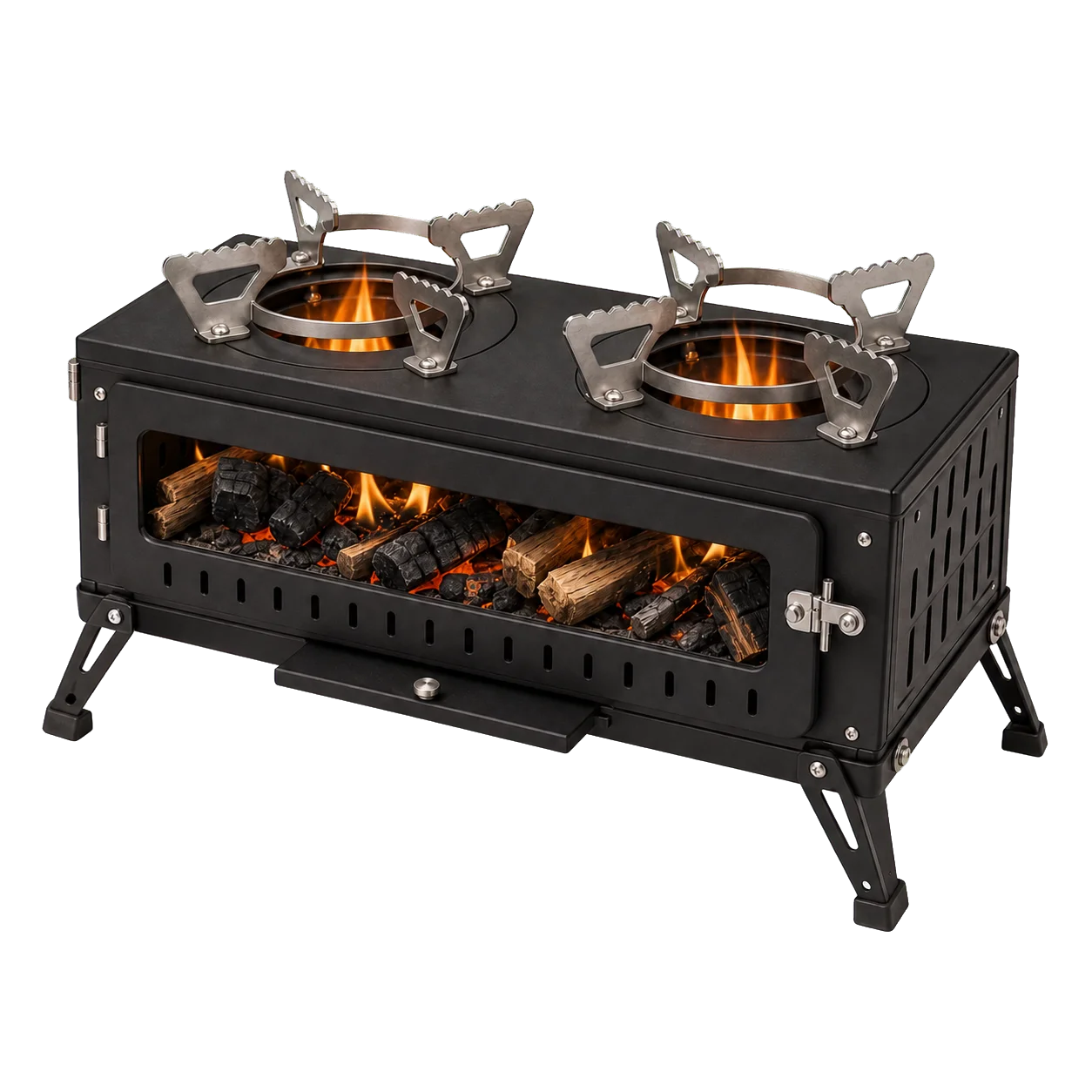
Two cookware positions can help organize a shared meal, but they need room for both pots and their handles. Compare combined weight, fuel access and the heat available at each position before choosing a two-pot stove.
Product Focus
Decide what each pot needs to do: boil, simmer or keep food warm. The two positions may deliver different heat, and that distribution must be checked on the selected model. Size the top and base around both filled pots and leave room to lift either one.
Choose the tasks for each position first, then evaluate whether the selected firebox provides the needed heat with both pots in place.
Check base diameters, handles and overhang together. Neither vessel should block the other, the fuel door or the controls.
Use both filled weights when assessing the top and base. A single-pot check does not establish two-pot capacity.
Design Details
Firebox layout and the internal heat path affect each position. Any baffles or outlet arrangement need evaluation with the cookware and cooking tasks you intend to use.
Confirm the cooking task and evaluate it with the intended vessel. Boiling and searing performance depends on operating conditions, so it is assessed under representative use.
Check whether the second position suits simmering, warming or another task. Do not assume it gives the same heat as the first.
Use the actual cookware and handles to check access to both vessels, the fuel door and hot controls.
Evaluate the extended top and base with both cookware loads, including fuel-door operation and normal stirring forces.
Specifications
Send both cookware sizes, filled weights and intended tasks. Confirm spacing, combined load limits and heat distribution for the selected model before planning simultaneous cooking.
Materials & Finish
A longer top needs support for two cookware loads, including off-center loading. Compare reinforcement and the condition after heating alongside complete transport weight.
Compare cooktop thickness, sidewalls and reinforcement with both filled-pot loads. Check the condition after heating as well as complete transport weight.
Any internal supports or baffles need materials suited to their heat exposure. Their requirements may differ from the outer body.
Support the body across its length in the carton and restrain loose parts so they do not rub against the cooktop.
Applications
Consider this format when two cooking tasks would make a family or group meal easier. The selected model must support the actual cookware and required heat at both positions.
For family basecamps, compare the two cooking positions with the actual pots and meal sequence, such as boiling in one while simmering in the other, if the selected model supports those tasks.
For longer stays, choose positions and supports around the cookware used at camp and confirm the heat available for each task.
For permitted outdoor group cooking, check that one operator can reach both pots and tend the fuel without moving loaded cookware.
OEM & Private Label
We can discuss ring sizes, top layout and fuel-door access around the cookware used in your market.
FAQ
Common questions about heat distribution, pot spacing, combined loads and fuel access.
No. A hotter position for boiling and a cooler one for simmering may suit the menu, but the actual distribution needs confirmation for the selected model. Two rings do not establish equal or independently controlled heat.
Provide both base diameters, handle dimensions and filled weights. Allow room to lift either pot without disturbing the other.
A suitable evaluation uses both filled pots on the required stable surface, with fuel-door operation and normal stirring forces. Check for lifting, sliding or movement at the feet and cookware supports.
The fuel door should remain accessible with both pots in place, without moving a loaded vessel or reaching beneath projecting handles.
Only where the design allows it. Confirm access, part reference, fastening method and the checks required after replacing or removing a baffle.