Uncoated Stainless Surfaces
A declared stainless grade provides an unpainted body option with corrosion and cleaning guidance matched to the expected humidity, deposits and storage routine.
Wholesale Camping Stoves
These stainless camping stoves combine declared component grades, specified surface finishes and fabrication criteria matched to the intended outdoor exposure and care routine.
Product Focus
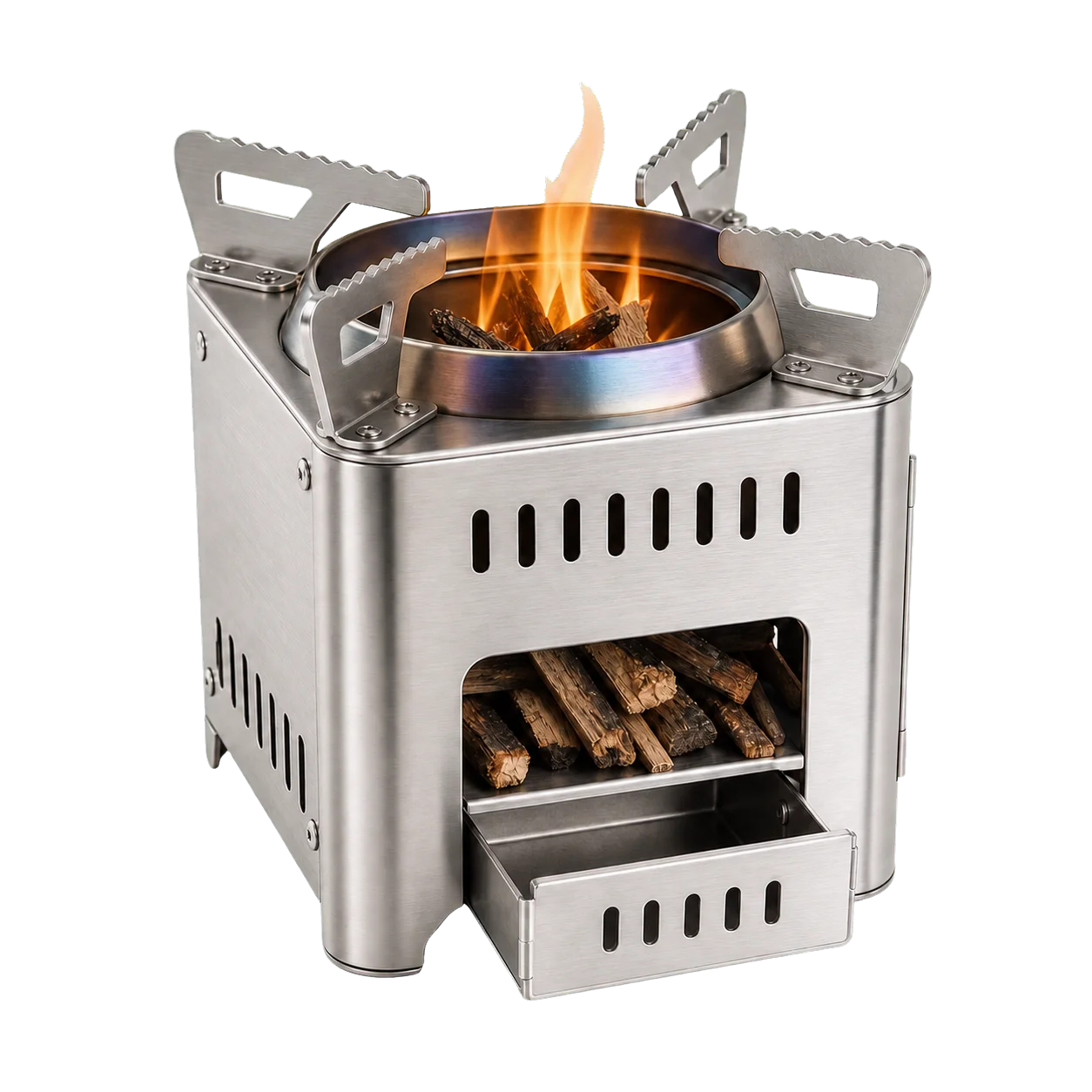
A stainless specification becomes meaningful through stated grade, consistent brushing, defined weld cleanup and protected surfaces. Those details should match the intended exposure and maintenance routine.
A declared stainless grade provides an unpainted body option with corrosion and cleaning guidance matched to the expected humidity, deposits and storage routine.
The schedule identifies grade and hot-zone thickness by component, while product information explains weld, panel and support behavior after the nominated fuel cycle.
The specification distinguishes food-contact parts, direct-flame components and removable service parts so each receives the appropriate material declaration and care instruction.
Design Details
Corrosion profile, formed vents, cookware supports and heat-zone fabrication are specified together for the selected component grades and operating configuration.
The body, grate, tray and fasteners are identified separately so corrosion and heat statements do not rely on a whole-product stainless label.
Punch direction, deburring and spacing are documented around air openings exposed to handling and heat.
Brushed panels and joined parts share a consistent grain direction, with weld cleanup defined before final surface finishing.
Cut edges, weld cleanup, fastener selection and brushing direction are specified at hot-zone transitions and at contacts between different alloys.
Specifications
A professional specification identifies where each grade is used and how visible surfaces will be protected through production and packing.
Materials & Finish
304 and 430 stainless address different corrosion environments and cost expectations; they should not be presented as interchangeable.
The selected stainless grade, sheet thickness and surface direction are stated by component rather than reduced to a generic stainless claim.
Grate, pot-support and firebox-edge thickness is established from the nominated cookware load, fuel configuration and expected heat movement.
The finish specification defines grain direction or matte texture, inspection lighting and acceptable appearance limits. Any protective film used in production must be absent from heat-exposed surfaces before firing or shipment.
Applications
Component grades and care requirements differ across humid storage, salt exposure and shared fleets; suitability depends on alloy allocation, fabrication and maintenance.
A component-level alloy schedule and dry-storage guidance help buyers assess models carried in damp vehicles or stored between outdoor cooking trips.
Coastal programs can specify alloy allocation, mixed-metal interfaces and cleaning guidance around salt deposits rather than relying on a generic stainless label.
Visible-finish criteria, service-part references and recorded cleaning instructions support fleets where condition checks occur between users.
OEM & Private Label
Grade declarations, brushing direction, weld appearance and protective packaging can be standardized across related stainless models.
FAQ
Component grade, visible finish, exposure and cleaning requirements provide the basis for comparing stainless configurations.
Only if every component genuinely uses that grade. A professional schedule identifies body panels, grates, trays, supports and fasteners separately.
Material certificates, supplier records and component-level verification can be included according to order value and destination requirements.
The order can define grain direction, weld cleanup, expected heat discoloration, protective-film use and realistic scratch limits under consistent inspection lighting.
Salt deposits increase corrosion risk, especially in crevices and on lower-alloy components. The grade schedule and cleaning guidance should reflect the intended environment.
Consistent grain direction, removable protective film where appropriate, non-abrasive separators and controlled component contact help prevent scratches before delivery.