Pack Shape for Your Transport
Compare a handled body for vehicle storage with folding or nesting options for smaller bags. Include all supports, trays and accessories in the packed dimensions.
Wholesale Camping Stoves
For car camping and short walks to a cooking spot, compare the whole packed stove: body, handles, cookware supports and ash tray. Tell us how your customers travel so we can discuss a suitable format.
Product Focus
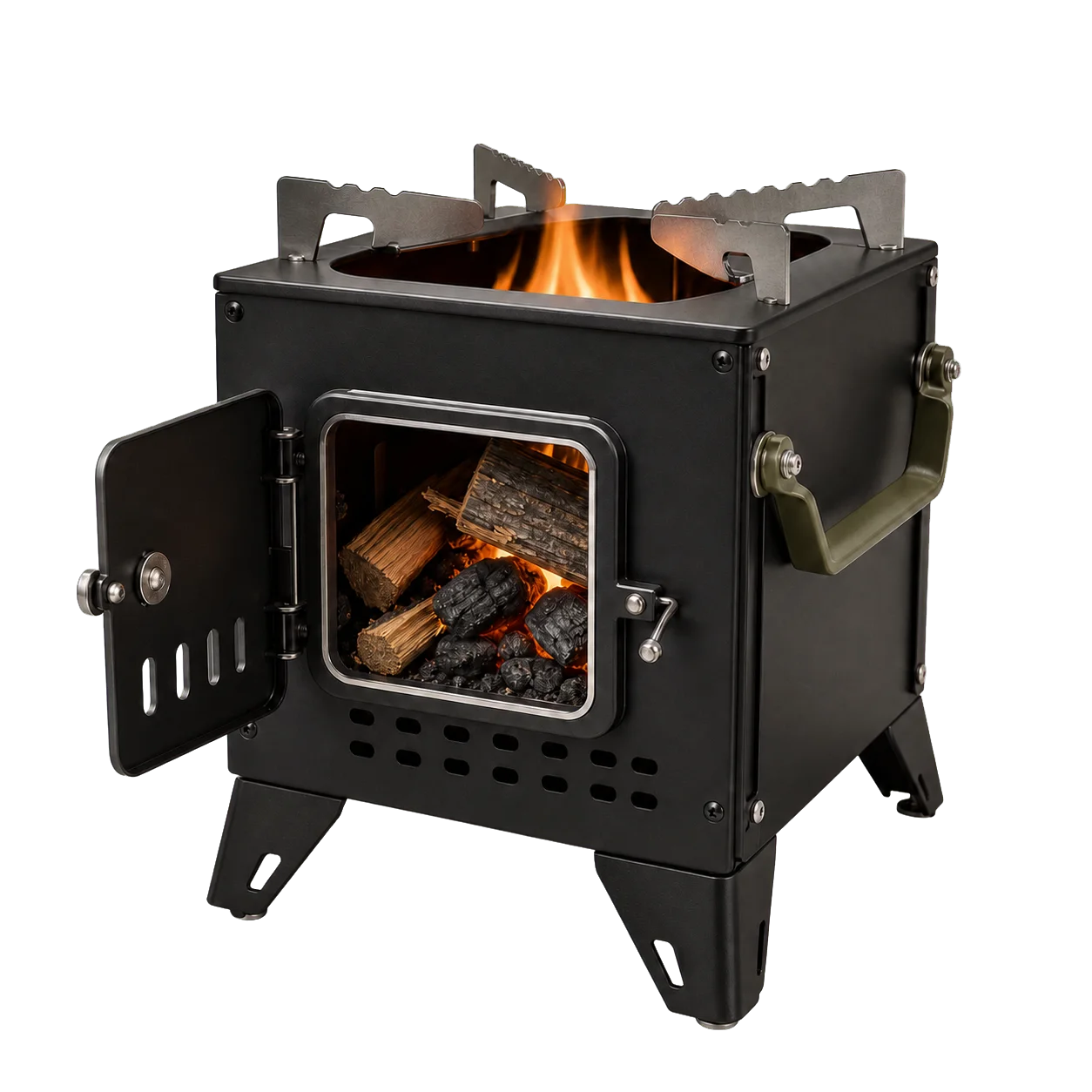
A handled stove may suit vehicle storage, while a folding or nesting format may fit smaller luggage. Compare the full kit’s size and weight, then check setup, cookware support and cleaning. Plan where the fully cooled, cleaned parts will go on the return journey.
Compare a handled body for vehicle storage with folding or nesting options for smaller bags. Include all supports, trays and accessories in the packed dimensions.
Retained parts or separate bag compartments can simplify setup and protect finished surfaces during travel.
Wood and charcoal place different demands on the grate, airflow and ash space. Confirm which fuel the selected model supports.
Design Details
Compare the packing and setup sequence as well as the cooking surface. Check that all parts have a secure position in transit and that the base is fully set up before you add cookware.
Check how the grate, supports and trays nest or are retained, and how easily you can see if a part is missing.
Compare leg spread and ground contact with the intended filled cookware. Use the stable, non-combustible surface required by the model.
A removable tray or accessible base can simplify cleanup. Extinguish the fuel and let the stove and residue cool fully before handling them.
With the stove fully cooled, check handle clearance, latches and contact between nested parts. Look for exposed edges or surfaces that rub during transport.
Specifications
Use these choices to tell us how the stove will travel and what it will cook. Fuel compatibility, packed dimensions, cookware limits and included parts need confirmation for the selected version.
Materials & Finish
Travel can wear surfaces at handles, latches and nesting contact points. Compare those details alongside body material and the care required after cooking.
An unpainted stainless body is an option to discuss. Confirm the grade and the cleaning and corrosion care it requires.
Black or olive finishes offer different appearances. Check where nested parts may rub and whether dividers or contact guards are needed.
Stainless trays or grates may be combined with coated bodies to address wear and cleaning requirements at specific components.
Applications
Each journey places different demands on pack shape, complete mass and accessory storage, so the product set should reflect the customer’s transport mode.
A handled or nesting format may suit vehicle transport. Cook only in the open air, away from the vehicle, and allow full cooling and cleanup before storage.
Choose cookware capacity for the meals customers prepare at camp, then compare how the stove packs between trips.
For short carries, compare complete-kit weight and packed dimensions, including the bag and every required support.
OEM & Private Label
Tell us your target travel use, cookware and storage space. We can discuss body sizes, fuel arrangements, colors and carry protection around those needs.
FAQ
Answers to common questions about car-camping kits, fuel choices and folding or nesting bodies.
Stable cookware support, easy removal of fully cooled ash and packing that keeps residual soot away from clean gear often matter more than saving every gram. Let all stove parts cool completely, then clean them before packing.
Only if the model is designed for both. Confirm grate position, airflow, fuel access and ash capacity for each fuel, together with the operating instructions.
Use verified complete-kit weight and packed dimensions, then show the actual setup method and included carry components.
Folding models usually reduce packed thickness, while nesting bodies can simplify setup and contain components. The correct choice depends on storage shape, vessel size and the number of loose parts accepted.
Sometimes. Handles, trays and supports must have matching attachment and seating dimensions, and fit needs checking on every listed size.