A Defined Setup Sequence for Day-Trip Meals
Picnic models should use an identified component order and the nominated cookware without requiring specialist assembly tools.
Wholesale Camping Stoves
These picnic cooking stoves combine nominated cookware positions, separated operator and serving sides, and a defined return-transport routine for parks and day trips.
Product Focus
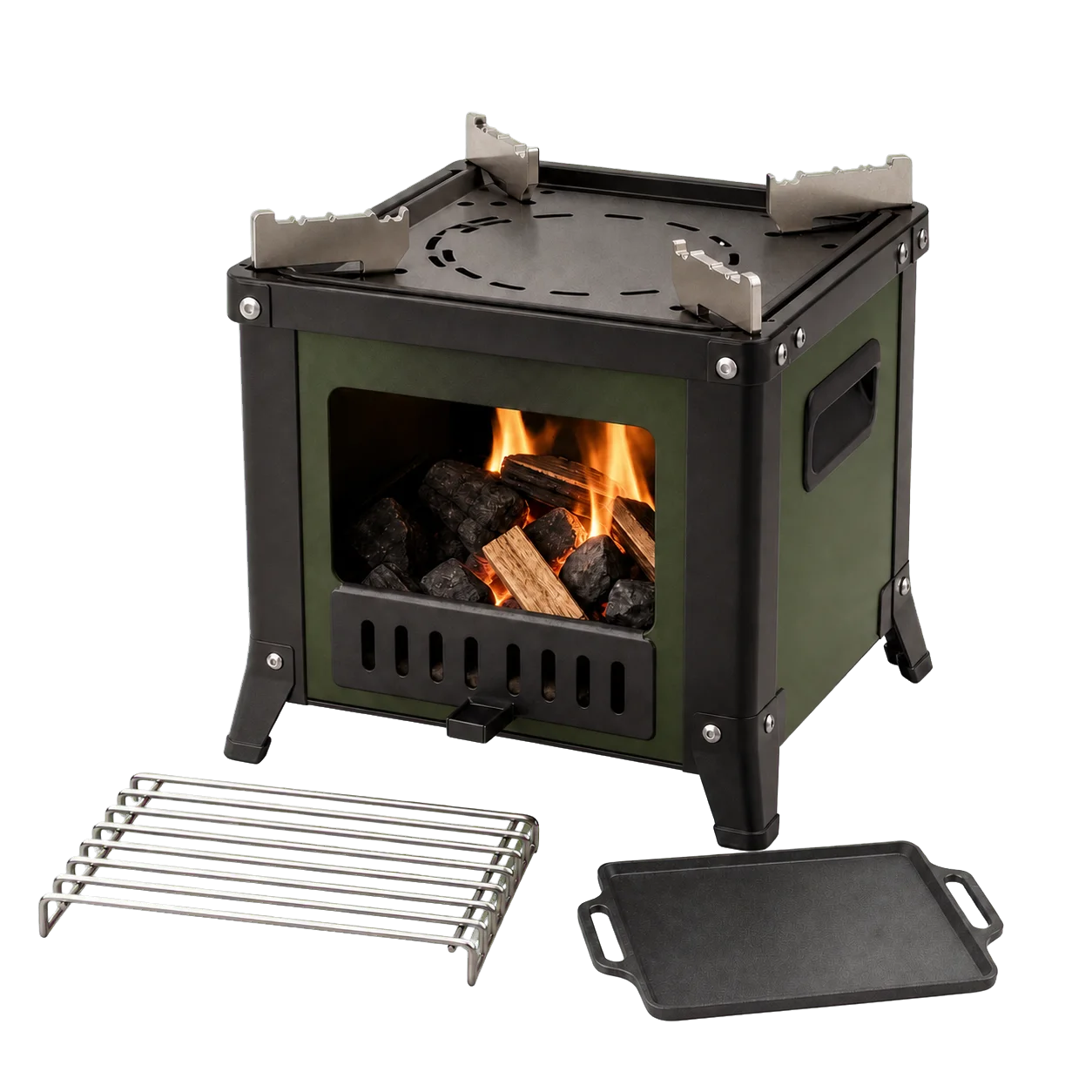
Picnic customers move between preparation, cooking, serving and cleanup in a short session. The stove layout should provide distinct access to fuel controls and food-transfer surfaces, with the intended menu and cookware established before body dimensions are fixed.
Picnic models should use an identified component order and the nominated cookware without requiring specialist assembly tools.
The final layout should support the planned kettle, pan or grill while leaving enough access to tend fuel and remove food from the serving side.
The product bill of materials identifies the fuel tray, cooking surface, handles and ash component so buyers can compare the quoted set with the packed configuration.
Design Details
The cooking surface, feed route and handles should support the intended meal sequence while keeping operator and serving zones defined and separate.
Grate width and vessel positions are established from the number of diners and planned foods, not from an arbitrary outer-body dimension.
The loading opening faces a dedicated operator side so normal movement of plates and finished food does not cross the main fuel-access zone.
Grates, trays and wind panels stack in a defined order with restraints that separate food-contact faces and reduce component movement in transit.
Fuel access, hot utensils and finished-food movement are arranged around a defined picnic workflow so normal serving does not require reaching across the combustion zone.
Specifications
Usable grill area or pot capacity should be stated for the intended meal format rather than inferred from outer stove size.
Materials & Finish
Cooking-contact components need their own finish decision rather than inheriting the body coating by default.
Carbon steel provides a coated body option, while declared stainless can reduce coating dependence on selected components. Body gauge follows the intended cookware and fuel bed.
Any grate or plate that contacts food uses a declared food-contact material and finish independent of the painted outer body.
Handles, ash-contact parts and cooking surfaces are separated after cooling so residue does not transfer to the carton or other picnic equipment.
Applications
Applications differ by menu, serving group, permitted location and return-transport routine.
The wider cooking area supports simple shared menus where several diners, frequent serving and short operating sessions matter more than overnight heating.
Clearly stated serving capacity and a defined post-meal cleanup route support permitted open-air gatherings.
A restrained component pack and separated return-transport layout suit meals prepared near a vehicle at permitted outdoor sites.
OEM & Private Label
The private-label set can specify a menu-specific grate, pan support, tools and transport protection for the intended meal.
FAQ
Cookware, serving flow, food-contact surfaces and cleanup determine the appropriate picnic format.
Start with diner count, menu, cookware and serving sequence. The usable grate or vessel area should exclude handles, fuel-access zones and surfaces outside the documented cooking zone.
Place the feed opening and hot adjustment on an operator side, then verify that plates, utensils and finished food can move through a separate serving edge.
The answer depends on the menu. Grates, wind protection, an ash tray and divided carry protection should each serve a defined cooking or transport role rather than merely increasing piece count.
A divided pack should keep fully cooled ash-bearing panels and greasy cooking parts away from clean utensils and food-contact faces.
Selected grates, supports and utensils can nest inside when contact points are protected and soot-bearing parts are separated from food-contact surfaces.