Stored Condition and Inventory Matter More Than Decorative Finish
Preparedness models need a documented inspection interval, complete parts list and illustrated setup sequence for the fuel modes stated on the pack.
Wholesale Camping Stoves
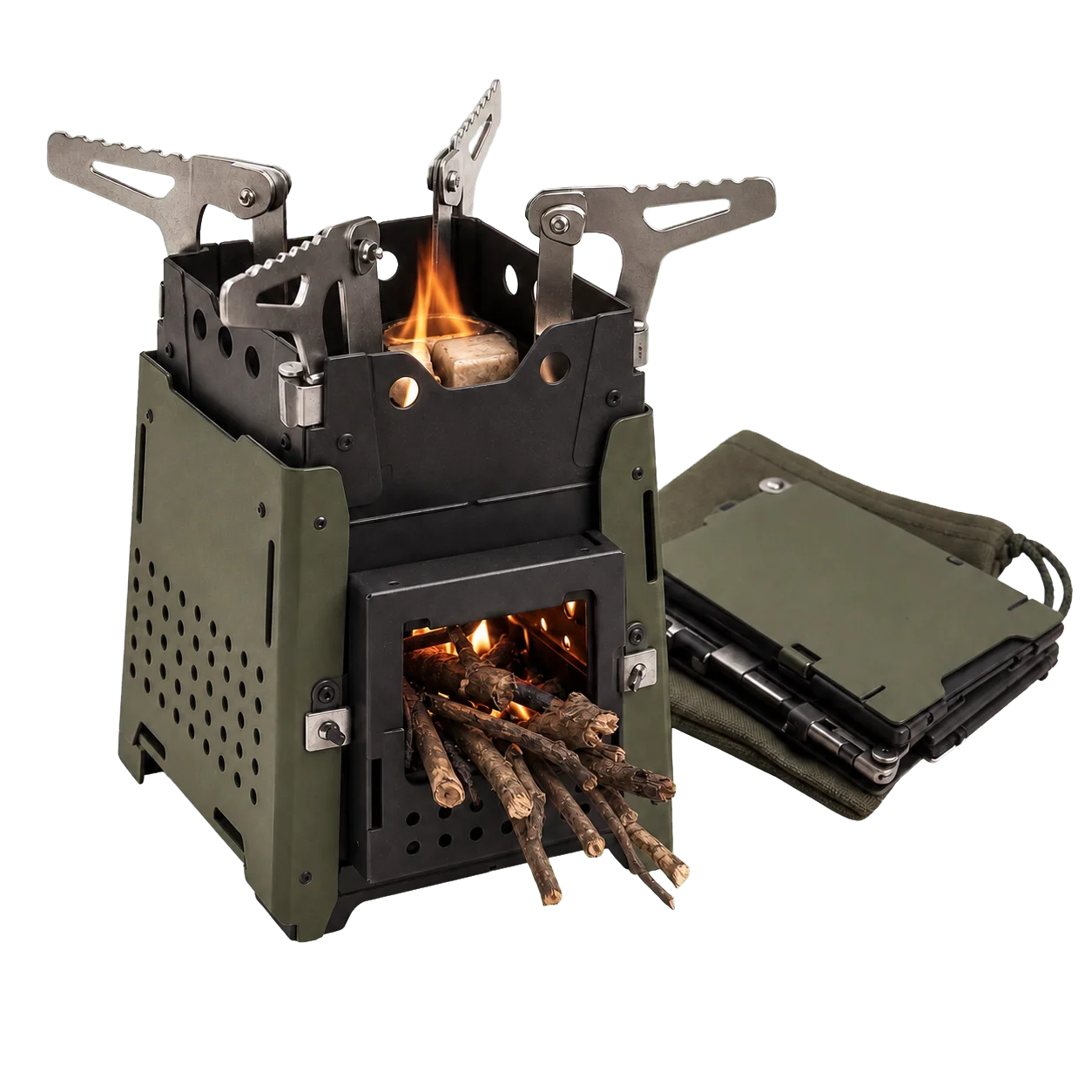
These emergency cooking stoves combine a defined setup sequence, accountable storage inventory and clearly separated fuel modes for household and institutional preparedness kits.
Product Focus
Preparedness equipment may remain stored for long periods, then be used under stress. The stove, component inventory and instructions must be understandable without relying on product familiarity or ideal field conditions.
Preparedness models need a documented inspection interval, complete parts list and illustrated setup sequence for the fuel modes stated on the pack.
Captured fasteners, distinct panel orientation and documented service parts reduce the number of loose components and adjustment steps during deployment.
The final pack lists every required part, compatible fuel dimensions, cookware limit, outdoor-only placement and cooling procedure without claiming performance from unspecified found fuel.
Design Details
Each documented fuel mode uses a specified grate or shelf position, with setup defined from the final retained instructions.
The final instructions are specified around unfamiliar users under the nominated lighting and weather conditions, recording part identification and assembly errors.
Wood, twig or tablet use is tied to the specified grate or shelf rather than presented as an unrestricted multi-fuel claim.
Corrosion protection, instruction placement and component retention are inspected on a schedule based on the stated storage environment.
Part identification and the packing checklist allow fuel supports, fasteners and retained instructions to be checked without consuming separately stored fuel.
Specifications
The complete inventory, corrosion protection and setup procedure should be checked at the documented interval for the actual storage environment.
Materials & Finish
Surface protection, inner packing and the inspection interval are specified around the expected storage climate and condensation risk.
Stainless or protected carbon steel is selected around the expected storage climate, inspection interval and risk of condensation inside the kit.
Fuel supports, pot contacts and fasteners use distinct references that can be checked against the stored inventory without specialist tools.
Dry inner packing, a complete component checklist and clear separation from fuel products support scheduled condition checks during storage.
Applications
Household emergency and institutional response kits require different inventories and documentation depth.
Numbered setup steps and an auditable inventory suit customers who may store the stove for long periods before using it under disrupted conditions.
Clearly bounded fuel modes, protected retained instructions and component references support organizations that need consistent inventories across distributed kits.
The stove can anchor a documented cooking module when instructions explain ventilation, open-air placement, fuel preparation and cooling before repacking.
OEM & Private Label
Component checklists, multilingual setup cards, color coding and storage protection can be configured for household or institutional preparedness kits.
FAQ
Fuel definitions, stored completeness, deployment and outdoor-only guidance are the central procurement questions for this category.
Use an accountable component inventory, corrosion protection, retained instructions and a documented inspection interval based on the actual storage environment.
Each fuel needs a defined support position, operating limit and instruction sequence. A general statement that the stove burns anything is not suitable for procurement.
Ask unfamiliar users to identify parts, assemble the stove and prepare the specified fuel using only the final instructions under nominated lighting and weather conditions. Record errors, completion time and any required assistance.
The kit owner should follow a documented inspection interval based on storage conditions, checking corrosion, missing parts, instructions and any separately stored fuel before an emergency occurs.
Yes. Color coding, engraved part numbers, inventory cards and multilingual setup sequences can be aligned with procurement and training requirements.