Compare Usable Cooking Space
Check the area available for food and the full kit weight. Include a secure position for the fully cooled, cleaned plate in the carry pack.
Wholesale Camping Stoves
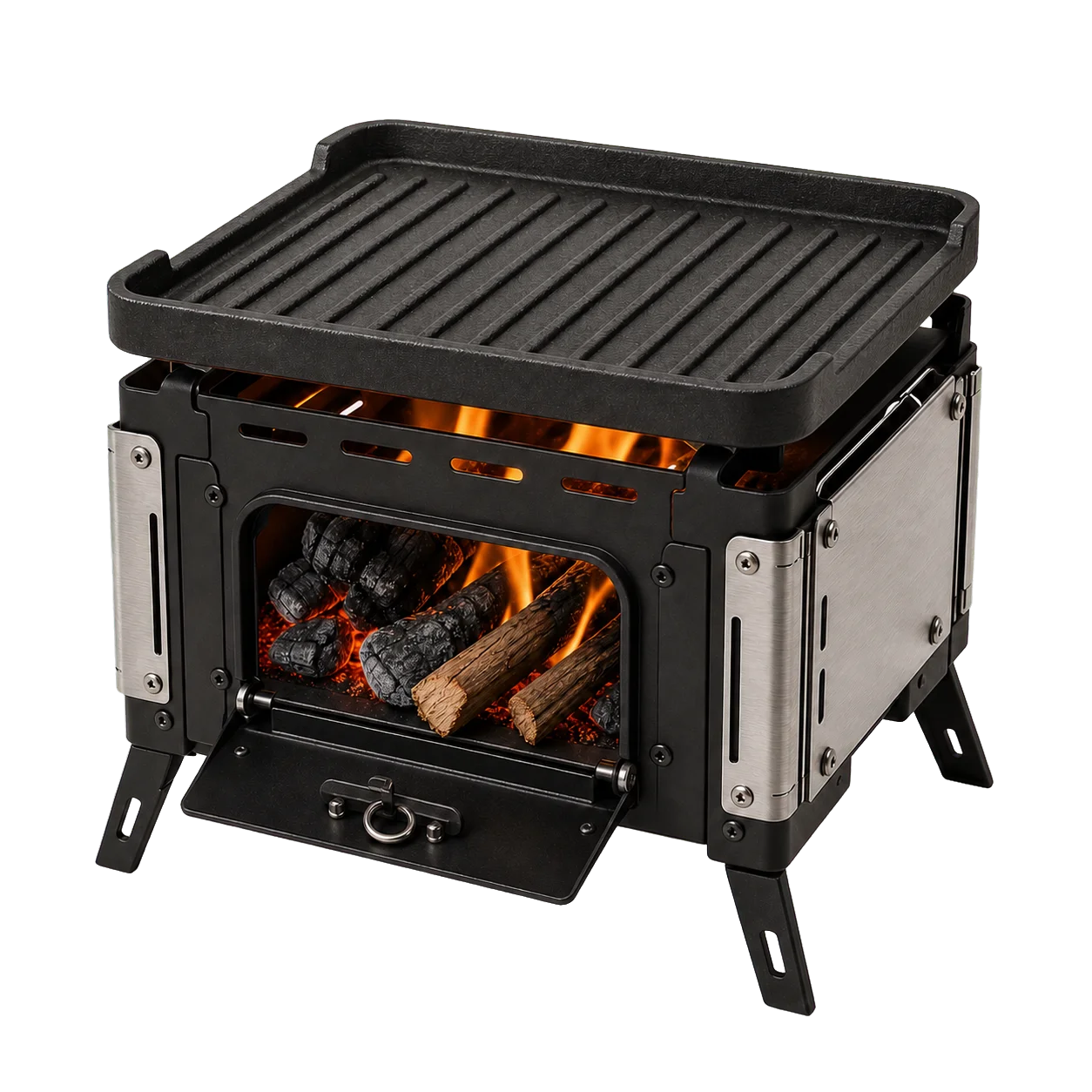
A removable grill plate adds a direct-contact cooking surface to a compatible camp stove. Compare usable area, plate weight, grease handling and cleanup around the foods your customers want to cook.
Product Focus
Plate material and thickness affect weight and cooking response, while support span and grease handling affect everyday use. Consider the stove and plate together. A larger outer plate does not necessarily give you more usable cooking space.
Check the area available for food and the full kit weight. Include a secure position for the fully cooled, cleaned plate in the carry pack.
Check runoff around edges, vents, seams and fuel access with the intended food. Collection and handling should keep grease away from the operator.
Match the material and finish to the menu and care routine. Confirm food-contact suitability for the destination market.
Design Details
Evaluate the plate with the intended fuel and food load. Heat distribution, grease runoff and the condition after cooling vary by model; model-specific data is available on request.
Compare thickness and unsupported span with the intended cooking cycle. Evaluate heat response, weight and the plate’s fit after cooling.
Exclude handles and inactive edges from capacity comparisons. Identify hotter and cooler areas only when supported by cooking trials.
If channels or a drain edge are proposed, check where they send grease and how it is collected, keeping vents and the operator clear.
Confirm how the plate is lifted once fully cooled, using its intended handles or tool. Check access to the firebox and avoid spilling residual grease.
Specifications
Compare the actual cooking area separately from handles and the outer dimensions. Confirm the plate material, support, food-contact suitability and removal method for the chosen set.
Materials & Finish
Cast iron, stainless steel and carbon steel differ in weight and care. Confirm the exact surface treatment before deciding whether seasoning is required.
Compare coated carbon steel and stainless steel by component grade, thickness and care needs. Plan dry storage and appropriate corrosion care for either material; stainless steel should not be treated as maintenance-free.
Confirm material, thickness and surface treatment for the exact plate. Food-contact suitability and any seasoning instructions apply to that surface, separately from the stove body.
Pack the fully cooled, cleaned plate apart from painted panels and ash-bearing components. Protect contact points to prevent rubbing in transit.
Applications
For customers who want pot cooking and a direct-contact surface in one kit, confirm both arrangements on the selected stove.
For breakfasts and griddle-style meals, compare the plate area and cooking response with the planned food, then check the cleaning method.
For vehicle-based picnics, a compatible pot-support and plate set can combine cooking options. Account for the plate’s weight and secure storage after full cooling.
For supervised group meals, confirm usable cooking area and load limits, and plan repeat cleaning between uses at permitted outdoor sites.
OEM & Private Label
We can discuss plate shape, handles, grease collection and utensils around the target menu. Food-contact information must apply to the exact plate and finish.
FAQ
Common questions about cooking area, plate construction, cleaning and seasoning.
Use the actual food-contact area, excluding handles and inactive edges. Describe hotter and cooler zones only when cooking trials support that description.
Evaluate representative heating, loaded cooking, grease drainage, full cooling and reseating. Compare cooking response, total kit weight and post-use plate condition before choosing thickness.
Define base material, treatment or seasoning, cleaning method and destination documentation separately from the coated stove body.
Only after full cooling, using the handles or tool specified for that plate. The removal method must avoid spilling grease toward the operator or the stove’s air openings.
Selected cast-iron or carbon-steel plates may support seasoning, subject to the process, food-contact documentation and care instructions required by the destination market.