Flame View with a Documented Window Assembly
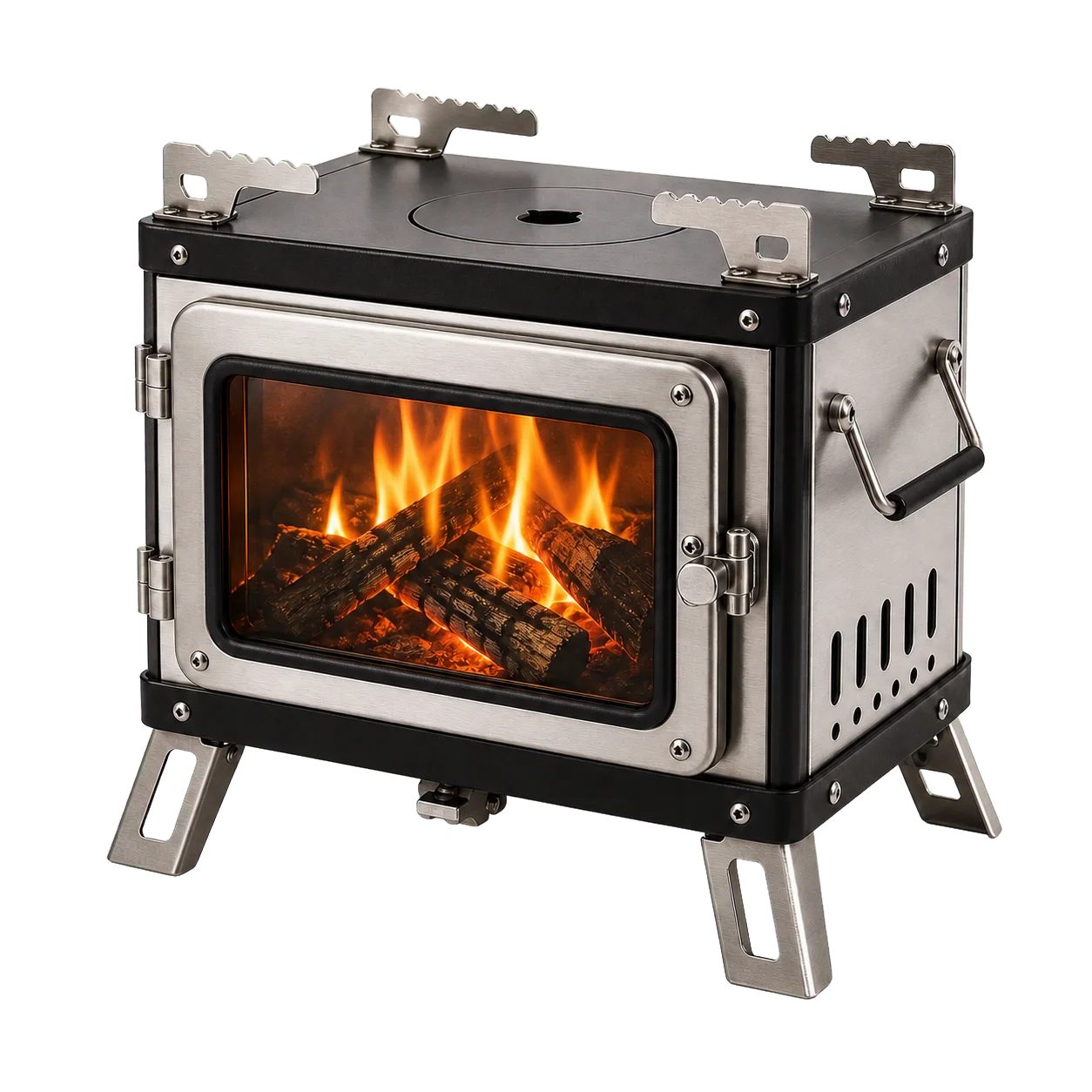
The window specification records pane material, visible area, gasket section, retainers and access for model-specific service.
Wholesale Camping Stoves
These flame-view wood stoves combine a specified heat-resistant pane, documented door-frame criteria, gasket compression and optional spare-glass protection.
Product Focus
A viewing window depends on frame condition, gasket compression and practical replacement access. Buyers should assess the complete door assembly and its specified firing cycle, not the pane in isolation.
The window specification records pane material, visible area, gasket section, retainers and access for model-specific service.
Latch pressure, frame flatness and gasket compression are included in the documented heat-cycle criteria, with point loading treated as an inspection failure.
Pane dimensions, glass type, gasket profile and fastener set are recorded with model-specific service references.
Design Details
Frame condition, latch pressure, gasket compression and combustion-air placement are specified around the selected pane, gasket profile and firing cycle.
The window surround is designed to carry hinge and latch forces through the metal frame, with glass-edge loading included in assembly inspection.
Fastener spacing, frame flatness and gasket seating are checked against the stated compression range before and after the specified heating cycle.
Combustion-air placement and the inner frame are documented with the selected firebox; any soot-reduction claim requires representative fuel and operating conditions.
The service method defines fastener order, gasket seating and the frame-condition checks required before and after fitting a replacement pane.
Specifications
Document glass type, visible area, gasket format, frame method and spare-part route alongside the firebox.
Materials & Finish
The body material, gasket and fasteners must tolerate different expansion rates without point-loading the pane.
Stainless or carbon-steel construction is specified with opening-flatness and gasket-compression criteria for the specified firing cycle.
The pane, gasket and retainers are specified as one assembly, including edge condition, clamping sequence and unacceptable point-loading conditions.
The pack plan defines rigid spacing between the glazing, chimney parts and loose accessories; an optional replacement pane uses its own identified protective pack.
Applications
Glamping and compatible hot-tent systems benefit when visual appeal is backed by clear installation and maintenance guidance.
A documented flame-view assembly suits supervised accommodation where operators control installation, seal inspection, pane cleaning and replacement stock.
The window adds flame visibility without changing the need for a manufacturer-supported shelter installation, ventilation, CO monitoring and continuous supervision.
Pane, gasket and retainer references support fleet inspections and model-specific replacement planning between rentals.
OEM & Private Label
Pane shape, frame finish, latch design, service references and optional spare-glass packaging are specified for the selected door assembly.
FAQ
Pane specification, replacement access, seal inspection, compatible installation and transit protection define the viewing system.
Record pane material, visible dimensions, edge finish, gasket section, frame method, fastener sequence and the replacement route as one door-system specification.
Not automatically. A larger opening can reduce frame stiffness, change latch loading and alter air behavior, so the complete door needs another heat-cycle confirmation.
Prevent impact, point loading and contact with loose hardware. Spare panes should have their own rigid protection and clear service identification.
Cracked glass can result from impact, point loading, incorrect gasket compression or unsuitable material. The frame, fasteners and protective packaging must match the specified pane and service method.
It can be included for remote-use orders, while other buyers may prefer separately protected service stock. The decision should consider breakage risk and replacement logistics.
No. Enclosed-shelter use requires a stove designed and documented for a compatible stove-jack shelter, the complete supported flue, specified clearances and floor protection, required ventilation, a working CO alarm and continuous supervision. The window does not change those requirements.