The Flue System Is Part of the Product
A complete chimney model specifies the collar, pipe sections, damper, terminal and storage method with the stove body instead of treating them as loose extras.
Wholesale Camping Stoves
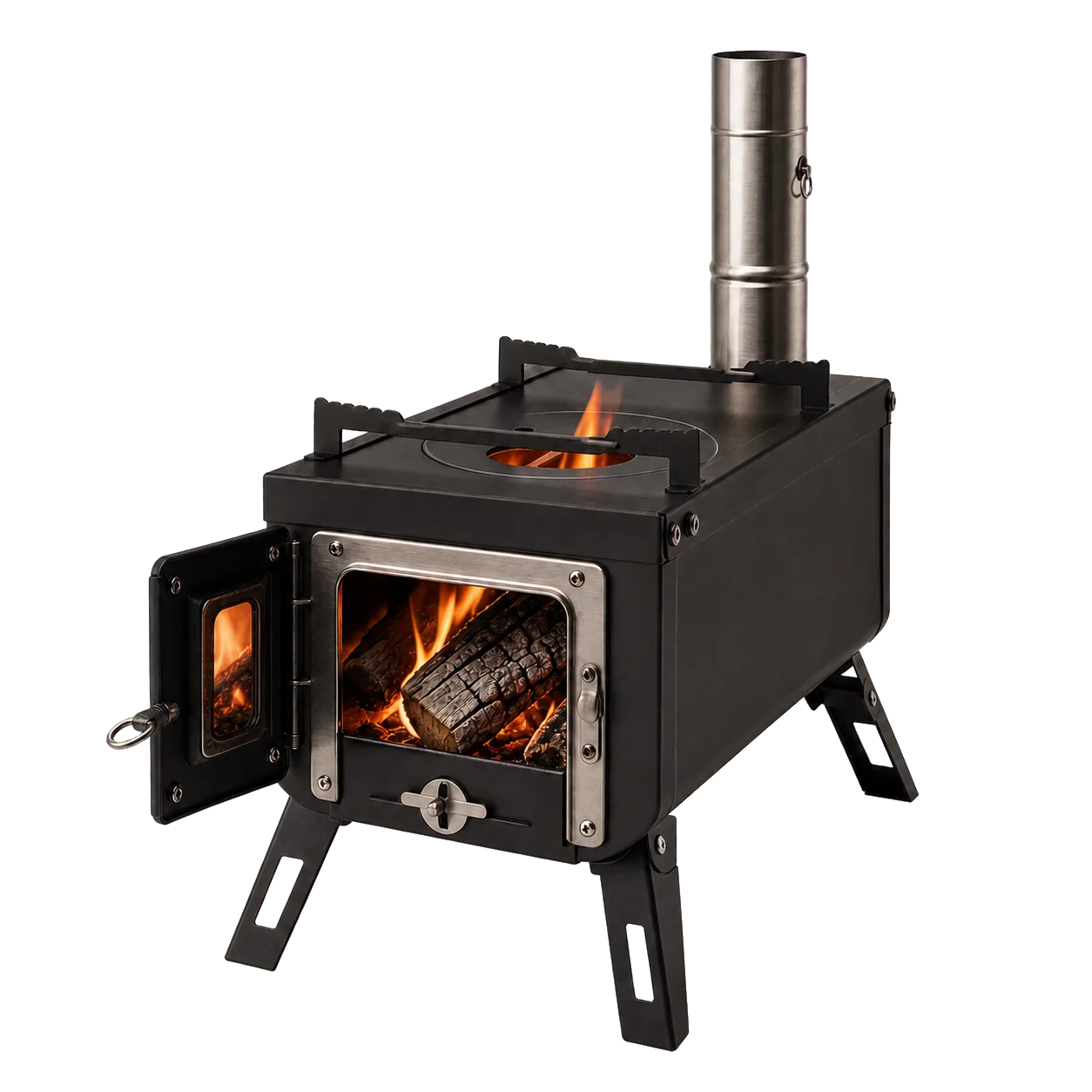
These vented camping stoves combine a compact firebox, matched collar, supported pipe route and installation guidance as one specified system.
Product Focus
Pipe diameter, joint direction, support and spark control are developed with the firebox. Every supplied section has a defined position, interface and service reference for the nominated installation.
A complete chimney model specifies the collar, pipe sections, damper, terminal and storage method with the stove body instead of treating them as loose extras.
Pipe diameter, assembled height and joint direction should be checked with the intended stove-jack shelter and the manufacturer’s ventilation and clearance instructions.
Provide stove-jack height, pipe exit route, required sections and transport length so the supplied flue reaches the installation without improvised adapters.
Design Details
Every joint should assemble in the prescribed direction, remain supported and permit inspection and cleaning through the intended service routine.
Collar diameter, engagement depth, joint direction and leakage criteria are specified with the supplied first section and checked in the nominated configuration.
Section lengths and connection features are referenced against the specified route so the installation does not depend on unapproved adapters.
The service plan identifies removal and inspection methods for the damper, spark-control and terminal components in the selected configuration.
Spark-control components, guying points, joint orientation and the cleaning route are identified for the selected terminal configuration.
Specifications
Where shelter use is intended, specify only a compatible stove-jack tent and follow both manufacturers’ installation requirements.
Materials & Finish
Body, collar and chimney sections experience different loads; the bill of materials should state each rather than use one broad metal description.
Carbon or stainless steel body panels use a collar sized for the specified chimney, with top-panel condition included in the specified firing cycle.
Pipe material, wall thickness and joint direction are declared separately from the firebox because the flue system has its own temperature and handling demands.
Nested or bundled chimney sections are isolated from painted panels, glass and sharp edges, with every support and terminal component identified.
Applications
Vehicle-supported basecamps and purpose-designed stove-jack shelters can support the full pipe system; improvised enclosed use cannot.
The system is relevant only where the firebox, supported pipe route, terminal components and compatible shelter instructions can be specified together.
Vehicle-supported camps can accommodate the complete flue kit and maintenance tools when continuous ventilation, clearances and attendance remain explicit.
Individually referenced pipe sections, supports, dampers and spark-control parts support operators who inspect and maintain repeated compatible installations.
OEM & Private Label
Pipe length, diameter, supports, terminal components and model-specific setup guidance are developed as one defined flue package.
FAQ
Shelter compatibility, supported pipe routing, ventilation and replacement sections should be considered as one installed system.
The compatible shelter, stove-jack height, supported route, required terminal position and manufacturer clearances determine section count; firebox size alone does not.
Only after diameter, joint direction, material duty and support compatibility are verified. Nominal diameter does not guarantee a compatible or maintainable connection.
The selected configuration is checked for joint engagement, draft, support, damper operation, terminal stability, cleaning access and its interaction with the nominated firebox.
Every section, damper, terminal, support and guying component needs an identified pack position with crush protection appropriate to the selected pipe construction.
Straight sections, collars, dampers, spark-control components and supports can be individually referenced when their interfaces remain consistent across the specified system.