A Grilling Mode Defined by the Complete Cooking Surface
The BBQ function should provide usable grate area, controlled distance above fuel and practical grease cleanup rather than a token grid placed over the firebox.
Wholesale Camping Stoves
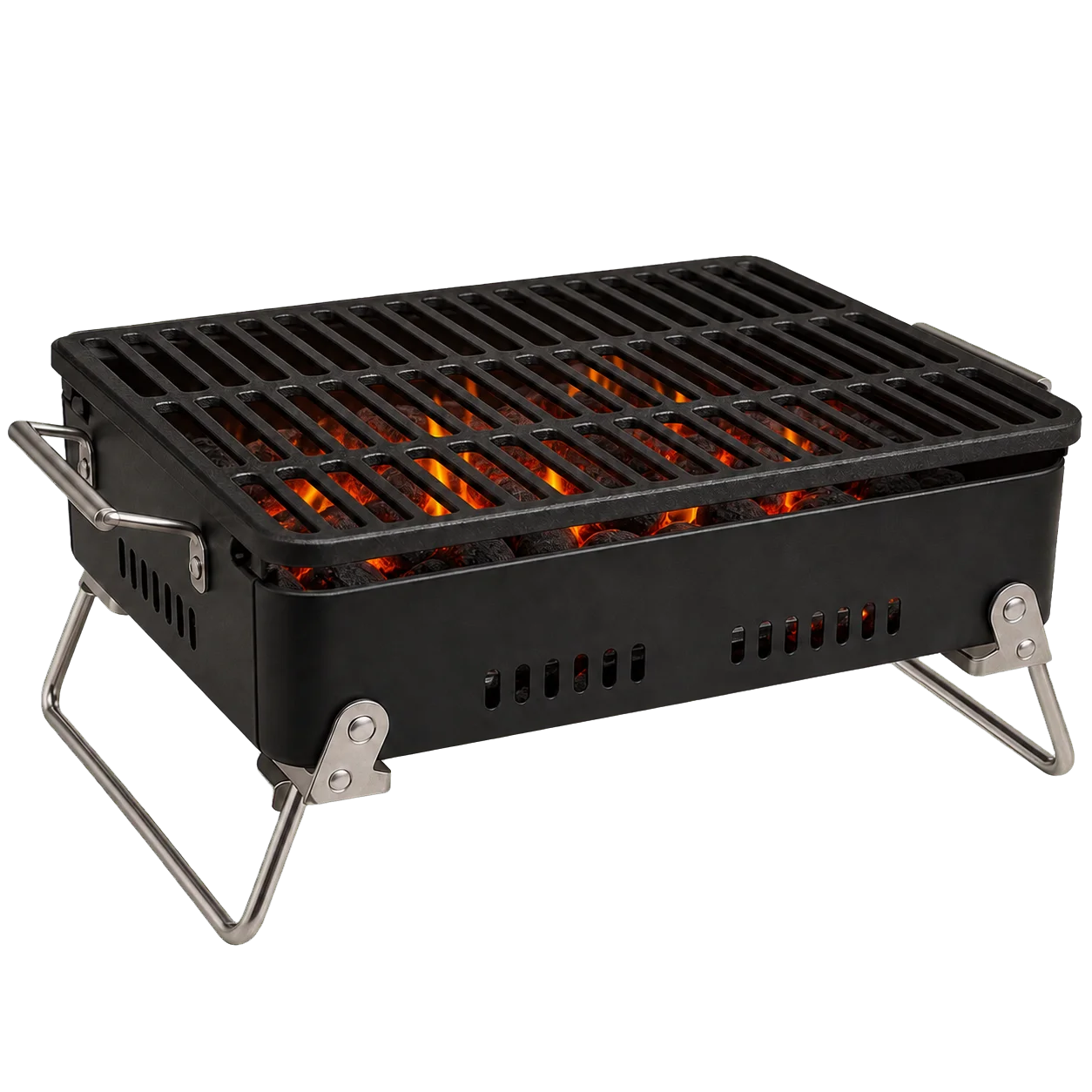
These compact barbecue stoves combine a defined grate area, stated charcoal clearance and separate grease and ash cleaning routes for campsites, tailgates and permitted outdoor gatherings.
Product Focus
Grate stability, usable edge-to-edge area and grease management influence the meal more than decorative body features. Buyers should define serving group and food type before selecting the grill format.
The BBQ function should provide usable grate area, controlled distance above fuel and practical grease cleanup rather than a token grid placed over the firebox.
Charcoal or wood should be replenished without lifting a loaded grate. Door position and hot handles directly affect the customer’s cooking routine.
Serving count, preferred fuel, food-contact surface and required tools establish grate size, fuel-bed depth and the final accessory set.
Design Details
Fuel depth, air openings and grate height define the direct-heat zone for the nominated food load; performance statements require the final fuel, grate and test conditions.
Fuel-tray depth, air openings and the nominated charcoal load are specified together with the food-surface clearance and observed flare behavior.
The cooking grid uses defined rim supports or retainers whose response is checked with the nominated food load and normal turning or scraping forces.
Vent tabs and fuel access are positioned outside the food-contact area, with their hot-use handling method documented for the selected configuration.
The cleaning sequence identifies the grate, drip components and charcoal residue separately so food-contact parts are not packed against ash-bearing components.
Specifications
Published dimensions should distinguish the actual food area from the outer body and identify every removable cleaning component.
Materials & Finish
Cast iron and stainless grates create different weight, seasoning and care expectations that should be explained in the product guidance.
Carbon steel supports coated barbecue bodies, while a declared stainless grade provides a different corrosion and finish-care profile. Fuel-bed depth and grate span inform the body gauge and support layout.
Stainless and cast-iron grates have different mass, seasoning, cleaning and storage requirements. Product guidance states the care routine for the selected food-contact surface.
Paint is kept away from direct food-contact zones. Grates, drip components and coated panels are packed separately to protect clean surfaces during export.
Applications
Tailgate, campsite and permitted event buyers require different packing, wind protection and serving capacities.
A removable food-contact grate and documented charcoal load suit short social cooking sessions where the cooled stove returns to a vehicle after cleanup.
Direct-contact grilling complements pot-based camp cooking at permitted sites when the usable grate area matches the serving group and planned menu.
Repeat group meals benefit from a stated food-contact area, a defined grate service plan and a cleaning routine that separates grease from charcoal residue.
OEM & Private Label
Grill size, lid or windscreen options, tool sets and grease protection can form a complete cooking set with serviceable components.
FAQ
Usable cooking area, grate care, fuel access and food-contact documentation provide the basis for comparing portable barbecues.
Use the food-contact area inside handles, inactive borders and adjustment hardware. This provides a consistent capacity comparison alongside the overall grate dimensions.
The intended charcoal load is checked through ignition, cooking and ash buildup while food height, vent response and flare behavior are observed. Both dimensions should come from the same documented method.
Do not assume so. Food-contact metal, treatment and documentation must be specified separately from decorative or heat-resistant coatings used on the firebox.
Fixed, height-adjustable and swivel grates require different retention and handle arrangements. The selected mechanism should be specified around the nominated food load and intended adjustment method.
Replacement grates, charcoal trays, fasteners and folding legs are the most useful candidates. The final list depends on whether parts are removable without specialist tools.