Match the Stove to Prepared Fuel
Compare the feed opening and chamber with the intended twig or split-wood length. Allow for regular tending; found fuel varies in size and dryness.
Wholesale Camping Stoves
Bushcraft cooking starts with prepared fuel and hands-on fire tending. Compare the feed opening, pot supports, cleaning access and packed weight for the cookware and trips your customers have in mind.
Product Focus
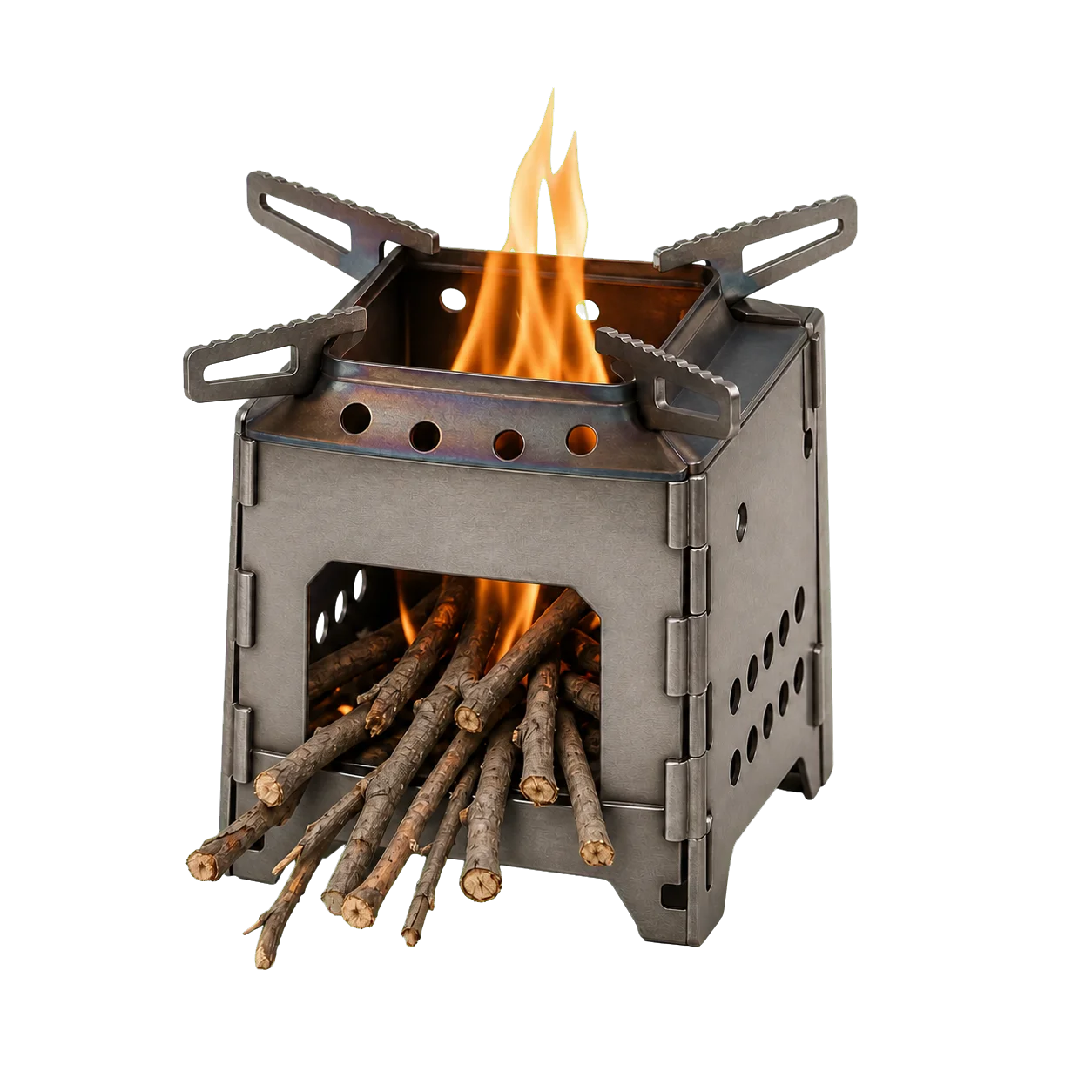
Short twigs and split wood need preparation, regular feeding and an accessible ember bed. A useful field stove leaves room to tend the fire with the pot in place, then comes apart or cleans up for storage after full extinguishing and cooling.
Compare the feed opening and chamber with the intended twig or split-wood length. Allow for regular tending; found fuel varies in size and dryness.
Check fuel entry, ember support and ash access with the intended cookware on the required stable outdoor surface.
Consider assembly, fuel preparation, cooking and cleanup together, ending with full extinguishing, cooling and a complete repacking check.
Design Details
Fuel size, dryness, ash buildup and cookware stability all affect the cooking routine. Compare them together rather than expecting consistent performance from any material found outdoors.
Choose the opening and chamber depth for the prepared twig or split-wood size. Do not assume compatibility with any gathered biomass.
Check grate spacing and air access through the intended fuel cycle, including the effect of ash accumulation and tending.
Review the joints and supports with a filled pot. After full cooling, check every loose part back into the pack.
Identify which grates, supports and fasteners can be cleaned or replaced and what tools the selected model requires.
Specifications
Use the following choices to brief us on the field setup. Confirm fuel size, cookware limits, weight and serviceable parts for the selected version; local gathering and fire restrictions still apply.
Materials & Finish
Compare the actual complete kits, including supports and storage. Material grade, thickness, joint wear and fit after cooling matter alongside weight.
Compare stainless grade, thickness and joints with the care and reassembly needs of the intended field use.
Compare a titanium version by complete-kit weight, panel thickness and joint fit after cooling. The material name alone does not establish a better backpacking kit.
Choose a pouch that protects edges and keeps the fully cooled, cleaned stove apart from cookware. Include it in the packed weight.
Applications
The product fits customers who accept active fire management and follow local restrictions on gathering and open flames.
For supervised skills courses, match the stove to the fuel and cookware used in training, and teach active tending and local fire restrictions.
For permitted trails and campsites, plan fuel preparation, ground protection and full extinguishing. Compare the full packed kit with the distance customers will carry it.
For outdoor work teams, define the prepared fuel, cookware and cleanup routine, and confirm that cooking is permitted at the work site.
OEM & Private Label
We can discuss the stove, soot-isolating pouch, utensils and field guide around your customers’ natural-fuel cooking routine.
FAQ
Common questions about prepared fuel, maintenance, packing and material choices.
The stated fuel range is short prepared wood and twigs. Confirm the model’s required fuel dimensions and dryness, and follow local fire restrictions. Compatibility and performance cannot be assumed for every material gathered in the field.
Pot supports, grate pieces and simple fasteners may be replaceable if the model provides access and clear part references. Confirm which tools are required before treating a part as field-serviceable.
A realistic trial should cover assembly, tending a fire with the specified fuel and stability with a filled pot. Once the fire is fully extinguished and the stove has cooled completely, assess ash removal and cleaning, then check that every part fits back into the final pouch.
After complete extinguishing and cooling, ash-bearing panels should be cleaned and placed in a soot-managing pouch away from cookware and clean equipment.
Compare grade, thickness, complete packed weight and joint fit after normal use. Include the care needed in the intended field conditions; the material name alone does not determine the better choice.