A Rigid Base for Familiar Cookware
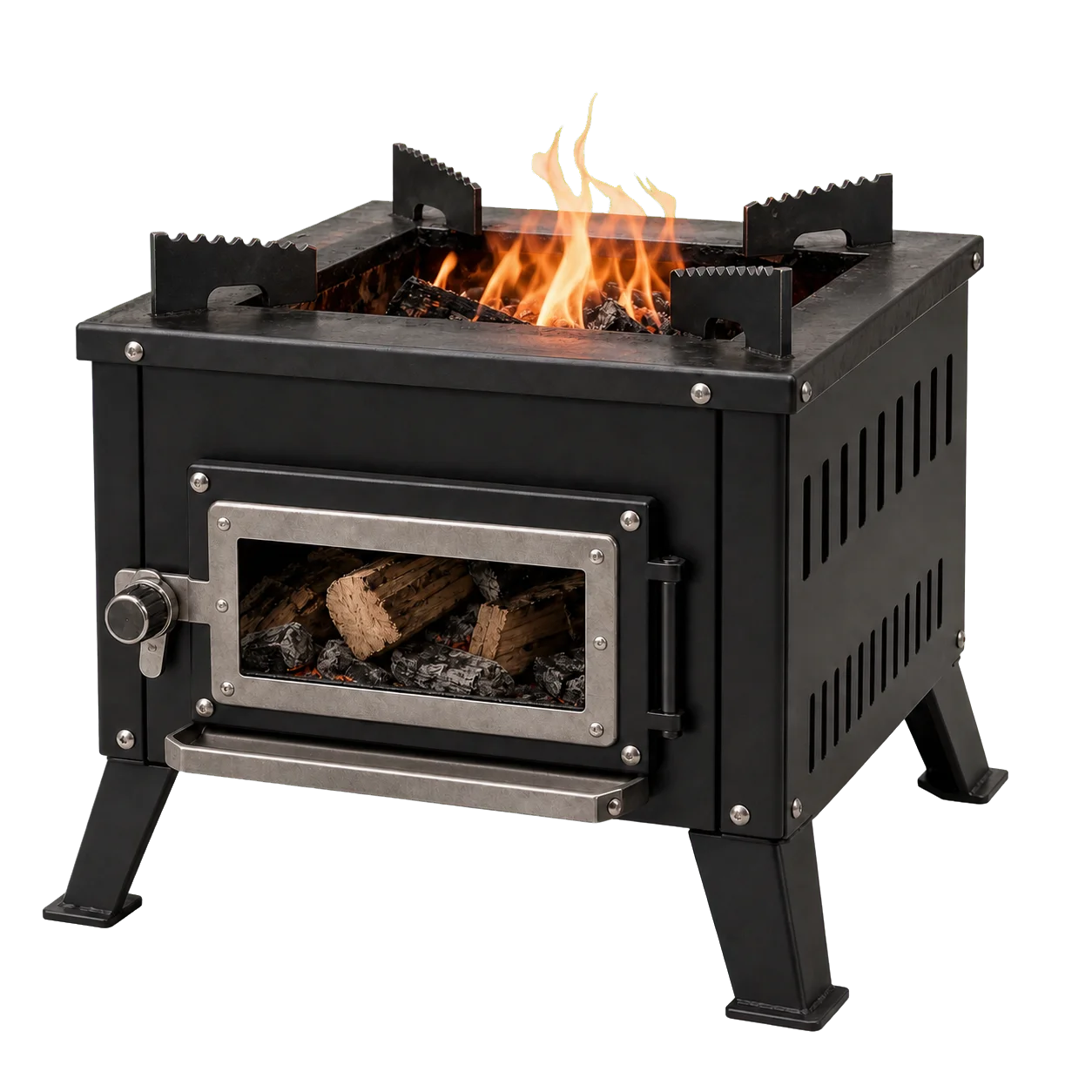
The rectangular firebox gives vehicle-based campers a stable top for kettles, pans and compact grill plates while keeping the fuel chamber easy to load.
Wholesale Camping Stoves
These rigid rectangular stoves combine a nominated cookware load, accessible fuel loading and defined transport protection for vehicle-based family camps.
Product Focus
The box format provides a broad top and accessible chamber. Panel gauge, corner construction and door alignment determine how the body carries its documented cookware and any model-specific outdoor flue loads after repeated heating and cooling.
The rectangular firebox gives vehicle-based campers a stable top for kettles, pans and compact grill plates while keeping the fuel chamber easy to load.
Latch engagement, primary-air adjustment and ash access should remain easy to operate with the fuel and cookware combination selected for the model.
Provide pot dimensions, filled weight, preferred log length and packed-size target so the body, top plate and accessory bundle can be sized together.
Design Details
Large flat panels need reinforcement in the required locations while the door, ash path and any model-specific outdoor chimney collar remain accessible.
Folded returns and controlled weld placement stiffen the rectangular shell without placing unnecessary mass across every hot panel.
Door height, hinge travel and latch resistance are specified so prepared fuel can be loaded while the nominated vessel remains steady on its supports.
Ribs or formed edges support the nominated cookware while allowing for normal thermal movement during repeated outdoor cooking.
Hinge support, latch engagement and the opening surround are developed as one assembly so the door continues to seat and operate after normal heating and cooling.
Specifications
Practical fuel length and nominated cookware determine panel gauge, door size and any model-specific outdoor venting interface.
Materials & Finish
Material and reinforcement are specified around broad-panel spans, nominated cookware and repeated heating and cooling.
Carbon steel offers a coated body option, while declared stainless components can use an uncoated metallic finish with grade-specific care. Broad side and top panels need gauge and reinforcement appropriate to the nominated cookware load.
Pot supports, the fuel grate and door hardware are specified separately from the outer shell because they carry concentrated heat, abrasion and repeated handling.
Black heat-resistant coating suits carbon-steel bodies; stainless models may use a brushed finish. Removable parts are restrained so they cannot mark the cooktop in transit.
Applications
The format suits customers who prioritize cooking capacity and a stated vessel load over minimum packed mass.
The rigid cooktop and firebox suit customers who carry nominated family cookware by car and prioritize cookware capacity over minimum pack weight.
A familiar rectangular body supports campsite cooking when fuel length and cookware capacity are stated clearly.
Retailers can select a plain cooking firebox or a model-specific window, ash tray, top accessory or outdoor chimney interface without presenting every feature as standard or implying enclosed-space use.
OEM & Private Label
Firebox dimensions, door hardware, top features and accessory storage can be specified as one family-camping stove.
FAQ
Cooking load, practical fuel length, door access and model-specific outdoor chimney or window features define the appropriate box-stove construction.
Provide the practical log length, door opening, top cooking area and heaviest filled vessel. These inputs establish the unsupported spans and reinforcement that the body must carry.
Compare joint access, heat movement, edge finish, repairability and complete weight on bodies built to the same intended duty. The lowest weld count is not automatically the most durable construction.
The feed door, latch, top plate, ash route and any chimney collar should continue to seat and operate without forcing after normal heating, cooling and cleaning.
Reinforcement should be considered when broad panels carry heavy cookware or experience sustained heat. The decision should follow vessel-load and heat-cycle testing rather than appearance alone.
Not by assumption. The door frame, collar position, panel gauge and airflow must be engineered as a model revision from the beginning. A collar does not make this outdoor cooking stove suitable for use inside a tent, vehicle or other enclosed space.