Cabinet, Support and Worktop Interface
Opening, internal depth, bearing points, cut-out, flange, edge treatment, drainage and adjacent-module clearances are recorded in one controlled drawing set.
Wholesale Live-Fire Cooking
Each stove unit is specified as part of a complete outdoor-kitchen installation, with cabinet and worktop drawings, operating loads, thermal conditions and maintenance routes tied to the named site construction.
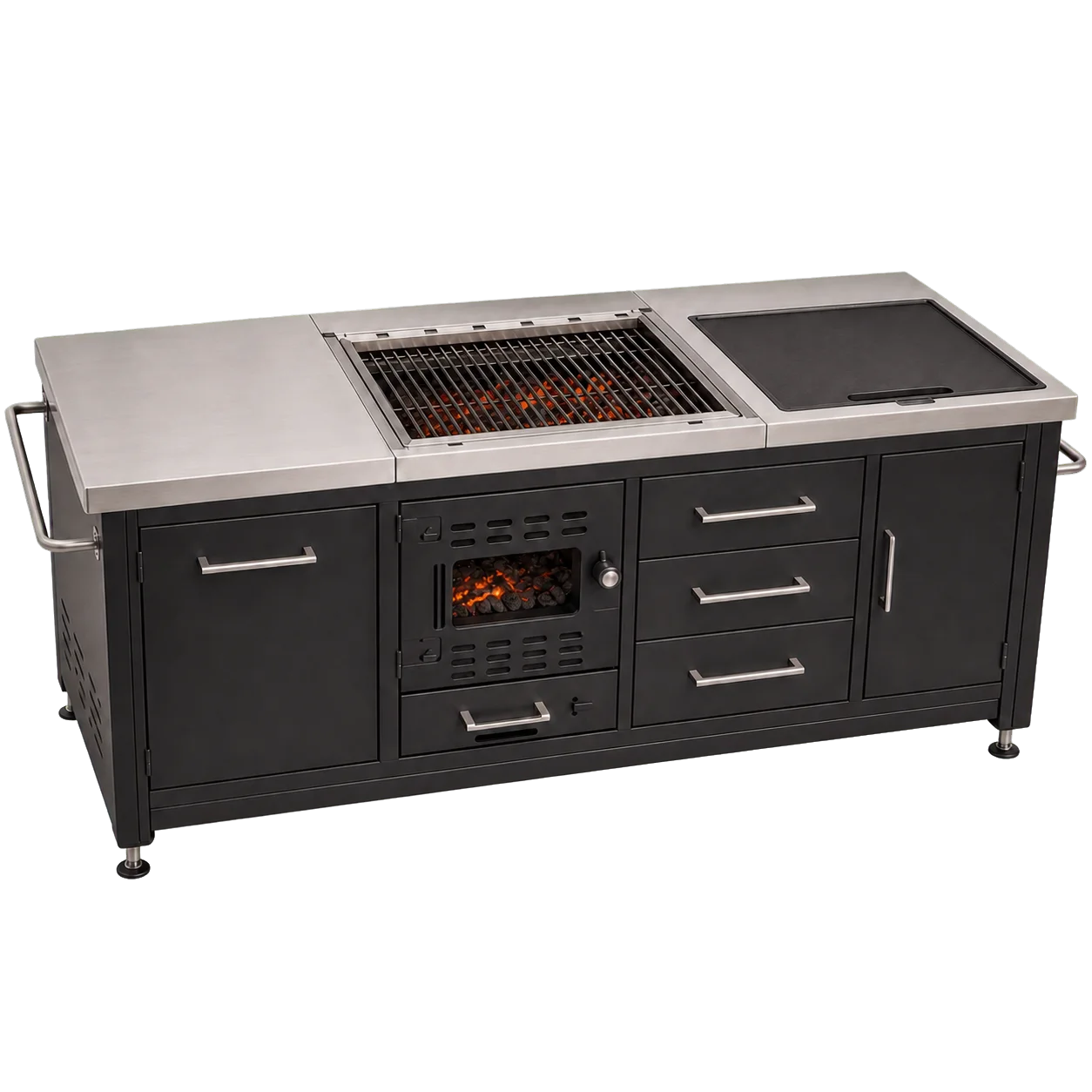
Product Focus
A live-fire insert transfers load, heat, airflow demand and residue into the surrounding kitchen. The selected module is therefore specified around actual cabinet and worktop materials, supports, adjacent components, fuel and cookware, plus the space needed to inspect and service it after installation.
Opening, internal depth, bearing points, cut-out, flange, edge treatment, drainage and adjacent-module clearances are recorded in one controlled drawing set.
Host materials, shields or air gaps, inlet and outlet paths, fuel load, operating duration and temperature measurement locations accompany the installation evidence.
Fuel loading, ash and grease removal, food-zone cleaning, inspection and replacement access are demonstrated in the installed position.
Design Details
The integration specification uses the production unit and the named cabinet assembly rather than a freestanding appliance or nominal cut-out.
Unit mass, maximum documented fuel, cookware or food and accessory loads are applied through the stated bearing points and host structure.
Cut-out tolerance, flange contact, edge finish, liquid route, door and tool movement are checked with the selected worktop material.
Temperatures and airflow conditions are recorded at specified cabinet, worktop and adjacent-component locations for the documented operating cycle.
The final installation is checked for removal paths, access doors, tools and clearances required by every stated routine service action.
Specifications
The installation record connects one unit revision to the host construction, operating load, thermal test condition, ventilation and maintenance access.
Materials & Finish
Combustion body, food-contact parts and cabinet or worktop interfaces receive separate material, finish and temperature records.
Material grade, section, joints, finish system, heat limits and complete operating-load condition are stated for the selected unit.
Grid, plate, ring, tray or utensil materials, grades, finishes, food-contact status, supported loads and cleaning instructions are recorded individually.
Material, thickness, geometry and host-specific temperature evidence are documented without treating an interface component as automatic cabinet protection.
Applications
Each project requires a controlled host drawing, operating brief, thermal condition, maintenance route and destination installation file.
A residential module can be specified around the exact cabinet and worktop materials, family cookware, fuel storage, child and guest separation, ventilation and service access.
A commercial-style outdoor station records menu load, operating cycle, ash and grease capacity, cleaning interval, operator circulation and applicable local requirements.
A project range can reuse a controlled detail only where cabinet construction, worktop, ventilation, adjacent modules and unit revision remain equivalent and documented.
OEM & Private Label
OEM configuration should define host alignment, load distribution, ventilation and installed thermal controls for one controlled station design.
FAQ
Installation compatibility belongs to a controlled unit revision, named cabinet and worktop construction, operating condition and maintenance envelope.
No. Opening and cut-out geometry, internal depth, bearing points, host materials, ventilation, adjacent modules and service access must match the controlled installation record.
Only the model-specific clearances and thermal conditions for the named construction are stated; destination fire, building and hospitality requirements also apply.
Contact is covered only where the documented material, cut-out tolerance, flange geometry, edge treatment, drainage and temperature record support that interface.
The installed envelope identifies access doors, tools and removal routes for fuel, ash, grease, food-zone cleaning, inspection and each declared replacement part.
Only a specifically compatible component with documented support, load, food-contact, heat, ventilation and service conditions is covered.
The development record includes cabinet and worktop drawings, host materials, adjacent components, operating load, menu, fuel, ventilation, thermal conditions, service routes, quantity and destination.