Base, Feet and Ring Contact
Pot-base diameter, cast-foot spacing, curvature, contact width and permitted movement are stated for the named vessel.
Wholesale Live-Fire Cooking
Each stand is specified with a named Dutch oven at its maximum stated filled mass on a stated ground condition, including ring contact, foot loading, tipping boundary and coal-tool access.
Product Focus
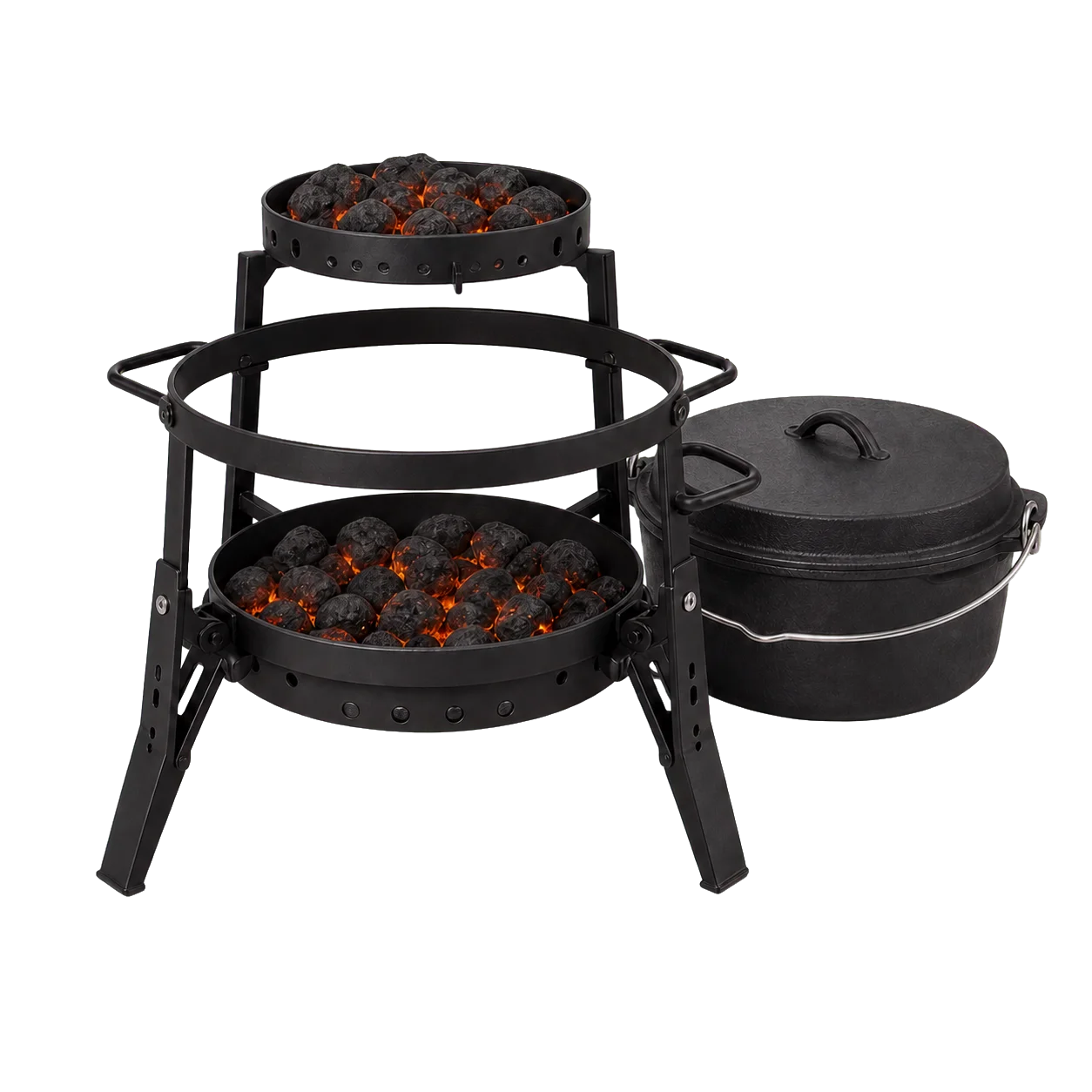
Nominal quart capacity does not identify base diameter, cast feet, curvature, bail clearance or loaded center of mass. The selected vessel and contents therefore define ring contact, stand height, footing and the operating space needed below and around the pot.
Pot-base diameter, cast-foot spacing, curvature, contact width and permitted movement are stated for the named vessel.
Water or food mass, stand height, foot spread, ground condition and a stated horizontal disturbance accompany the load assessment.
Pot base, stand legs and braces are checked against coal placement, lid lifting, stirring and serving routes without assuming that access remains clear.
Design Details
The complete stand and filled pot are specified together through placement, cooking-tool loads and fully cooled removal.
Foot area, penetration or rocking and stand level are stated on the firm non-combustible surface rather than inferred from leg spread.
The named vessel and maximum contents are applied with the stated stand height and a stated off-center or horizontal disturbance condition.
Contact points, permitted movement and interaction with cast feet, curved bases and the bail are checked in the advertised orientation.
Lower fuel placement, lid handling, stirring and serving actions are checked around legs and braces while all hot-part boundaries remain identified.
Specifications
Selection begins with the exact Dutch oven, its filled mass and the outdoor surface on which the stand will operate.
Materials & Finish
Vessel contact, structural load path and wear interfaces are specified separately from generic material positioning.
Steel grade, section, joint method, ring contact finish, coating limits and load condition are stated for the selected stand.
Grade, section, fabrication, surface finish and storage-care requirements are declared without treating stainless steel as proof of stability or maintenance-free use.
Contact geometry, wear criteria, locking method and replacement reference are confirmed where folding or detachable construction is offered.
Applications
The relevant stand follows the actual pot profile, filled load, ground condition, fuel placement and operator actions at the intended site.
A fixed or folding stand should state the exact packed vessel, maximum meal load, campsite surface and cooled transport arrangement.
Regional cast-iron vessels can define ring contact, working height, coal access and service-part needs without relying on nominal capacity alone.
An instructional setup states vessel compatibility, ground condition, participant separation, lid and serving tools, and the defined hot-equipment zone.
OEM & Private Label
Private-label work can coordinate vessel contact, filled-load condition, stand geometry, ground support, coal access and cooled transport around the named Dutch oven.
FAQ
Compatibility and load capacity belong to a named filled vessel, complete stand and stated ground condition.
No. Base diameter, cast feet, curvature, bail geometry and loaded center of mass can differ even when nominal volume is similar.
The complete stand is specified on the stated ground with the named vessel, maximum contents, working height and defined off-center or horizontal disturbance condition.
Only a specifically stated foot and soil condition is covered. Firm, level, non-combustible ground remains the reference unless testing supports another surface.
The operating envelope includes pot base, ring, legs, braces, coal tools, lid lifting, stirring and serving actions for the selected cooking method.
A folding or detachable claim requires the complete load statement, positive locking method, wear points and confirmed replacement references.
A clear quotation needs vessel profile, empty and filled mass, ring contact, desired height, ground and tipping condition, coal-tool access, transport format, quantity and destination.