Saleable-SKU Component Register
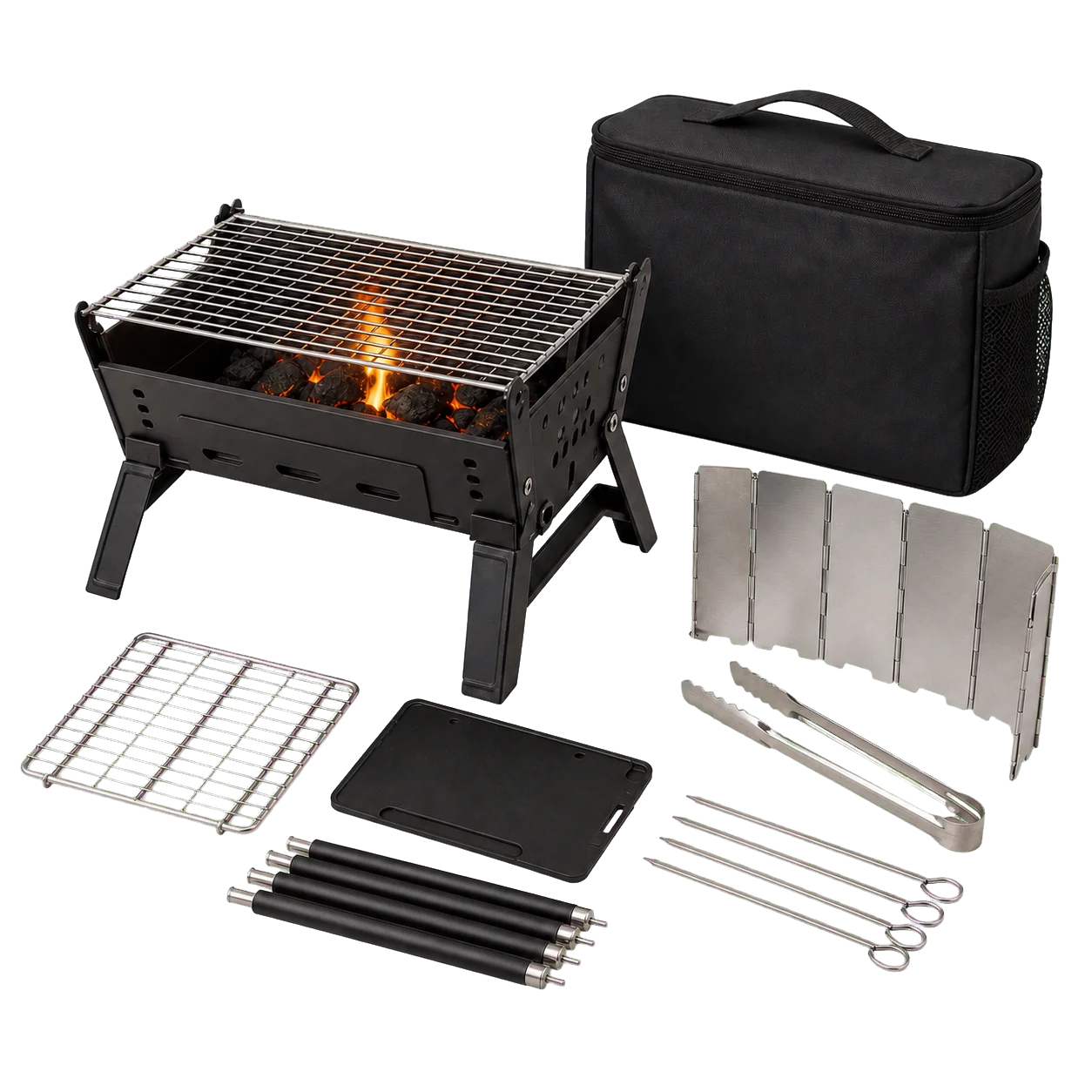
The body, supports, fasteners, grid, plate, tools and storage pieces are identified by name, quantity, revision and assembly role for the exact kit sold.
Wholesale Live-Fire Cooking
Each kit is treated as one shipped and repacked system, with every required component named, weighed, assigned to an assembly step and returned to a defined storage position after complete cooling.
Product Focus
A high accessory count does not show whether the advertised grill can be assembled, loaded, cleaned and packed without missing parts or contaminating food-contact items. The saleable kit should make the received, used and repacked states equally clear.
The body, supports, fasteners, grid, plate, tools and storage pieces are identified by name, quantity, revision and assembly role for the exact kit sold.
Published transport data covers every listed component in its final case, including loose-part restraint and any protected edge or fragile interface.
The return sequence begins only after extinguishment and complete cooling, then separates cleaned food-contact items from soot- or ash-facing components.
Design Details
The kit specification follows the same component set through unpacking, assembly, supervised cooking, complete cooling, cleaning and refit into the final case.
Part names, quantities, mating references and storage locations are reconciled with the final saleable SKU before assembly.
The supplied supports, locks and tools are used in the stated sequence; improvised fasteners, ground props or unlisted utensils are excluded.
Ground contact, grid support, cookware or food mass, fuel access and tool movement are specified for the declared field surface.
After full extinguishment and cooling, residue-facing parts and cleaned food components return to assigned compartments without forced closure or uncontrolled loose pieces.
Specifications
One kit specification covers the exact contents supplied, the assembled cooking arrangement and the complete system returned to its case.
Materials & Finish
The kit specification separates food-contact declarations from structural duty and from the textile or rigid storage system.
Material grade, finish, weld or edge condition and cleaning instructions are stated for each grid, plate or utensil intended to contact food.
Material, section, joint method, coating limits and assembled load condition are stated for parts carrying the grill, fuel or cookware.
Fabric or shell material, closure, compartment layout, sharp-edge isolation and compatibility with completely cooled cleaned parts are stated for the final case.
Applications
Trip format changes the acceptable packed mass, component count, fuel provision, ground setup and return-storage routine.
A vehicle kit should state the complete case mass, family cookware or food load, longer tools and separated return-storage arrangement.
A compact inventory can support a short assembly sequence, nominated meal, permitted fuel and a fully cooled same-day repacking routine.
A stored kit can include a dated inventory, inspection schedule, compatible fuel plan and replacement references without implying suitability for indoor emergency use.
OEM & Private Label
Private-label work can coordinate the saleable inventory, field supports, cooking components, supplied tools and carry case around the nominated meal and transport method.
FAQ
Kit value depends on the exact shipped inventory, assembled cooking condition and complete return-packed system rather than accessory count alone.
The named SKU includes every component required for its advertised setup, with part name, quantity, revision, assembly role and storage position.
Packed mass covers the complete listed configuration in its final case, not only the stove or grill body.
They can occupy a compartment that prevents contact with completely cooled soot- and ash-facing parts, sharp edges and uncontrolled loose components.
The final production kit is unpacked, assembled with only supplied parts, loaded on the declared ground condition, cooled, cleaned and refitted into its case.
Only when the correct fuel support, batch limits, airflow arrangement, ash capacity and instructions are included and stated for each mode.
A clear quotation needs trip and carry method, menu, cookware or food load, fuel, exact inventory, ground condition, packed mass and envelope, quantity and destination.